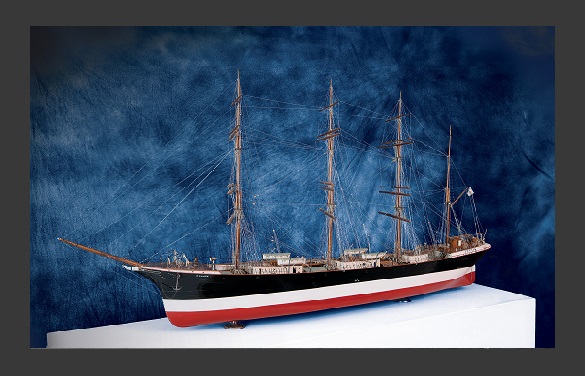
Ship’s model Ponape

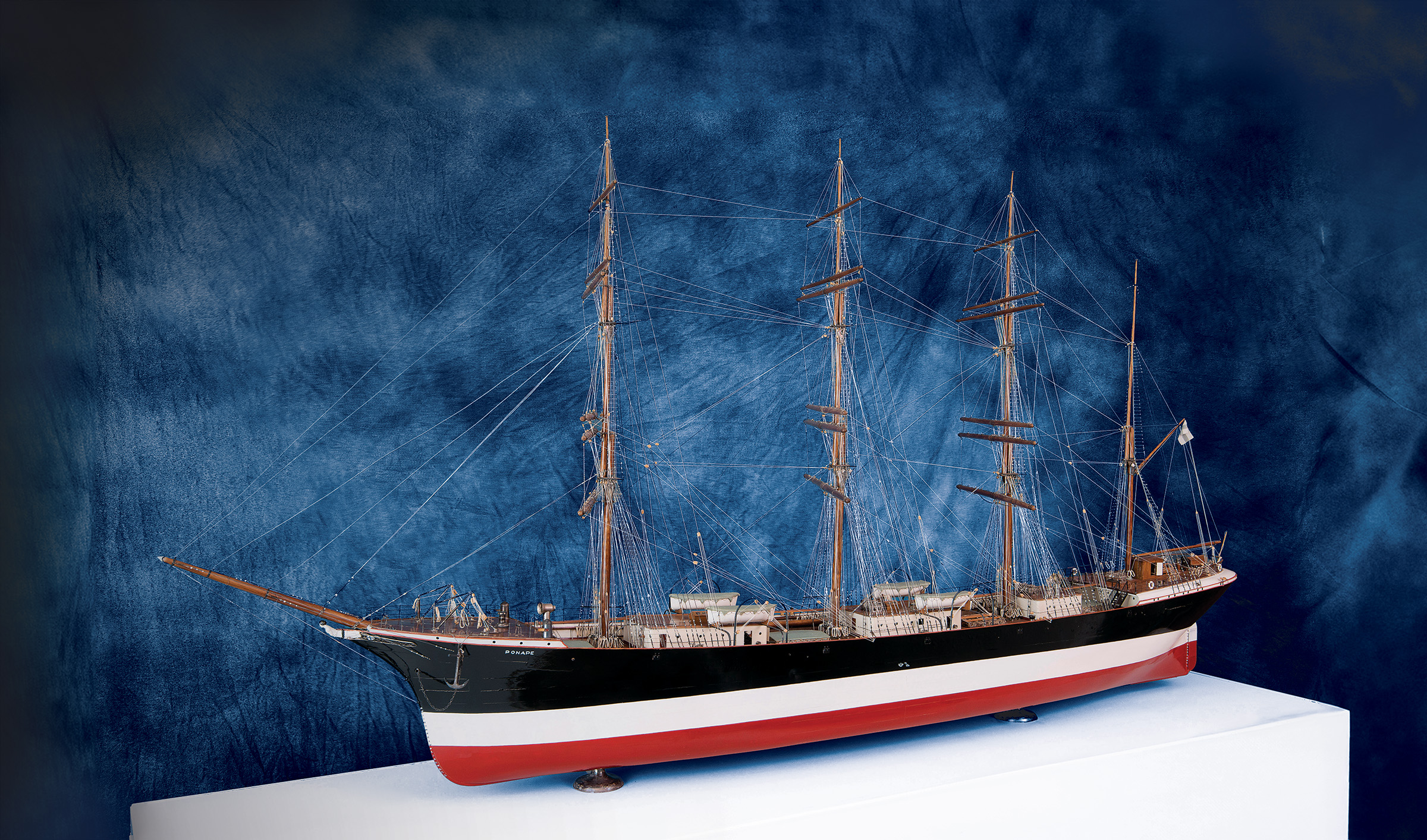
Built by Runar Husell
Built during internment on the Isle of Man during the Second World War
and completed in 1954.
Time consumption: circa 8 000 hours
Length: 226 cm
Scale: 1:40

Picture of the model ship Ponape.

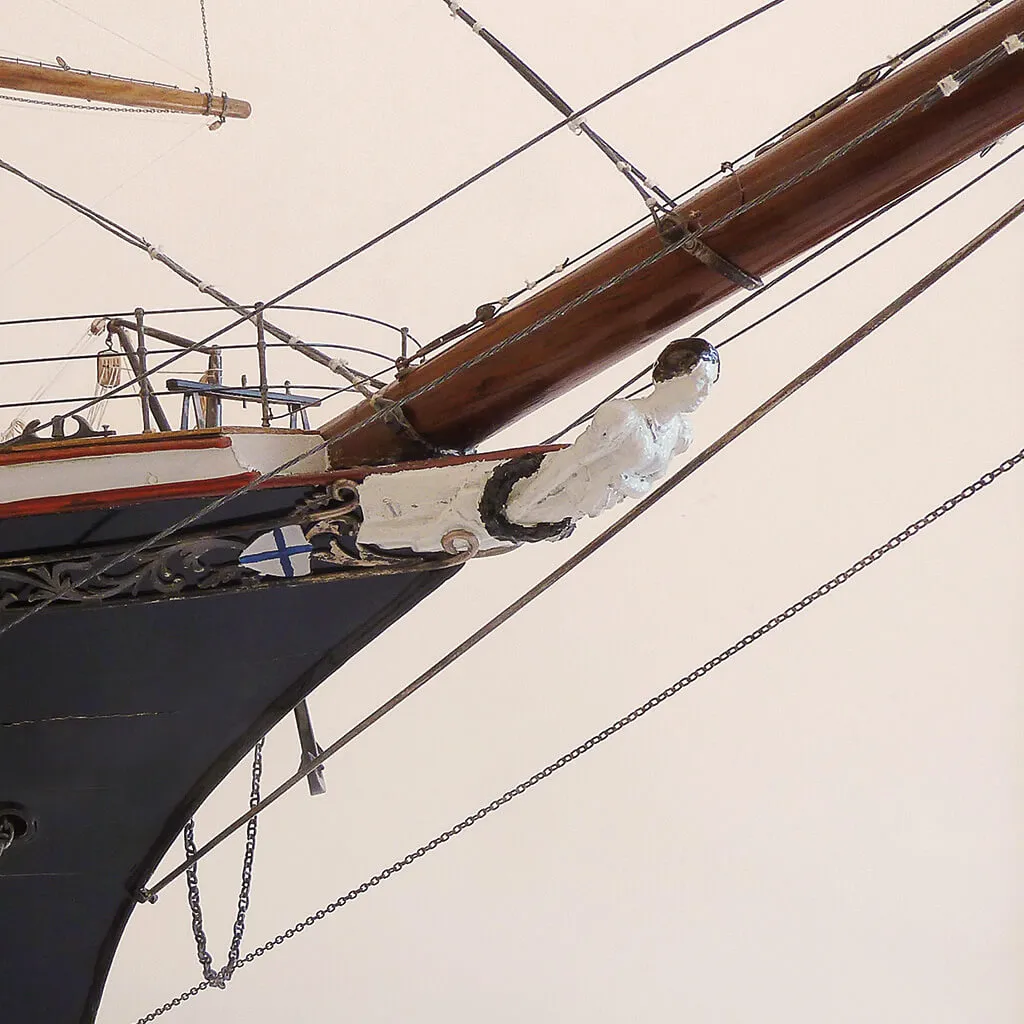
Figurehead
The figurehead of the ship Ponape depicts Regina Elena, Queen of Italy. The figurehead is on display here on the upper floor of the Maritime Museum.

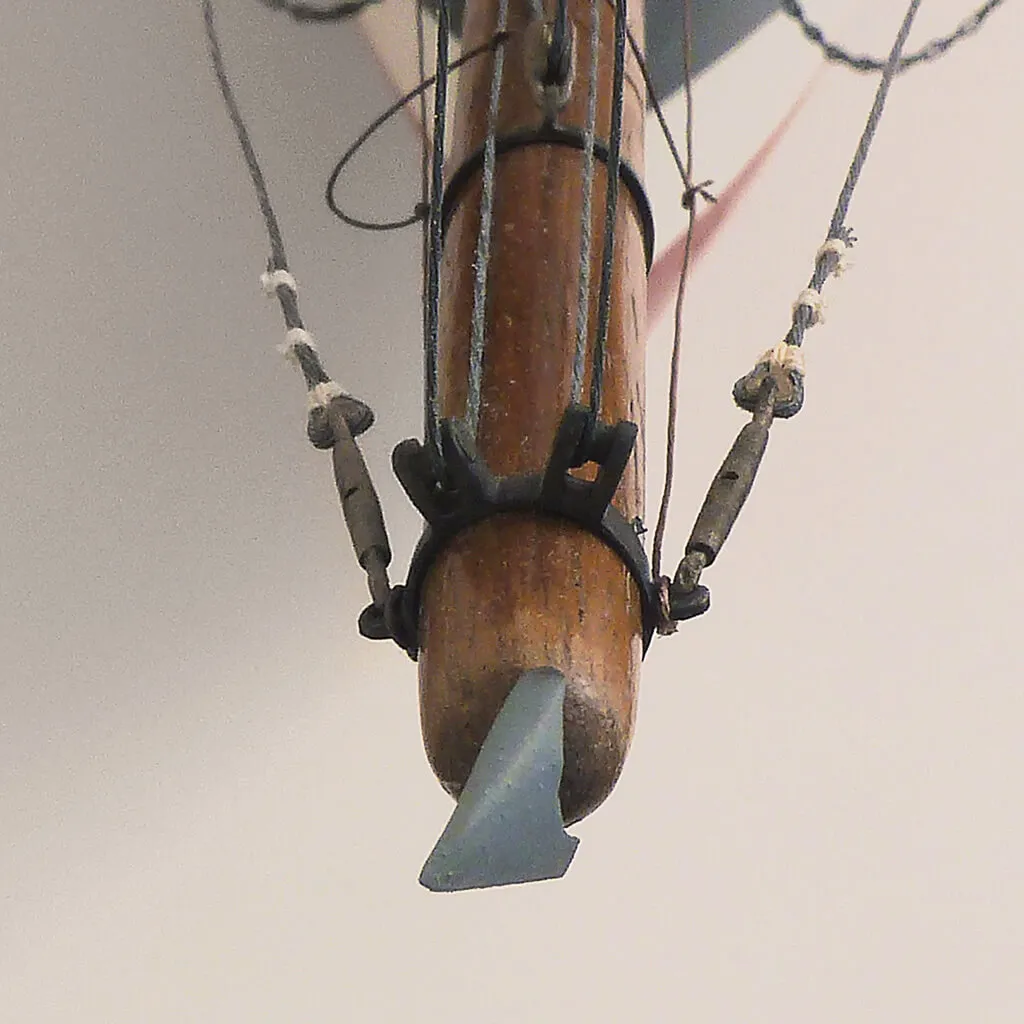
Jibboom cap with shark fin
The jibboom in the bow has fittings and rigging screws. The crew could attach a sharkfin to the far end of the jibboom as a trophy when they had caught a shark during the trip.

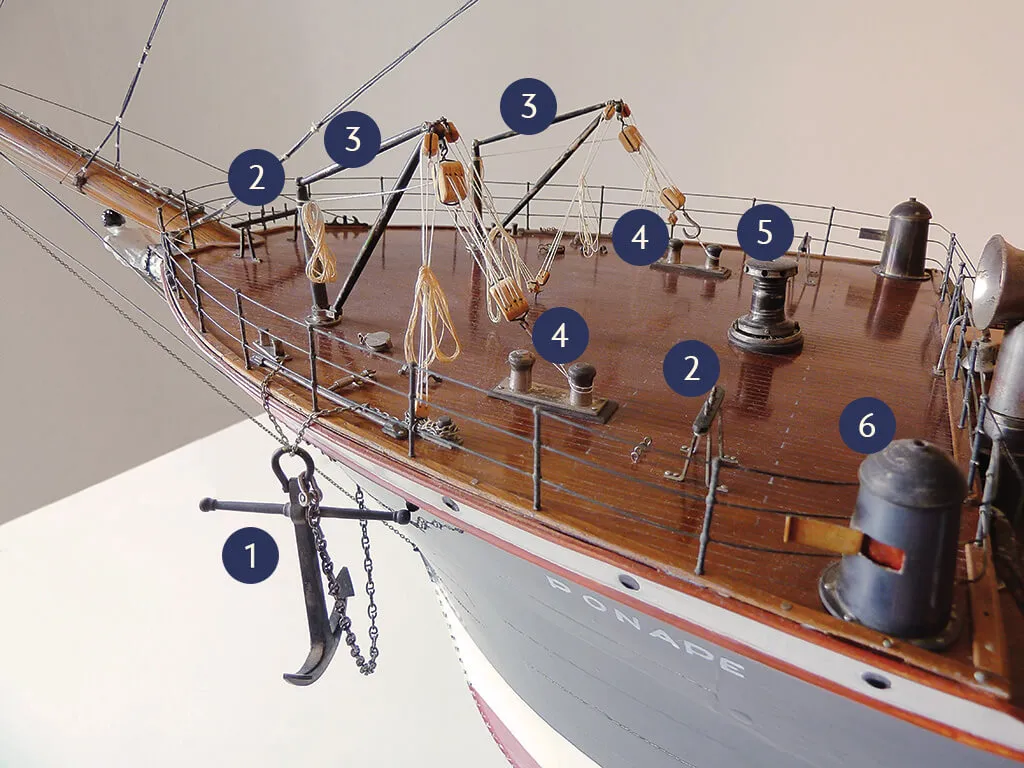
The fo´c´sle head
1. Anchor with drop mechanism
2. Pin rail
3. Anchor cranes with tackle
4. Double bollard
5. Capstan for the anchor windlass
6. Lantern

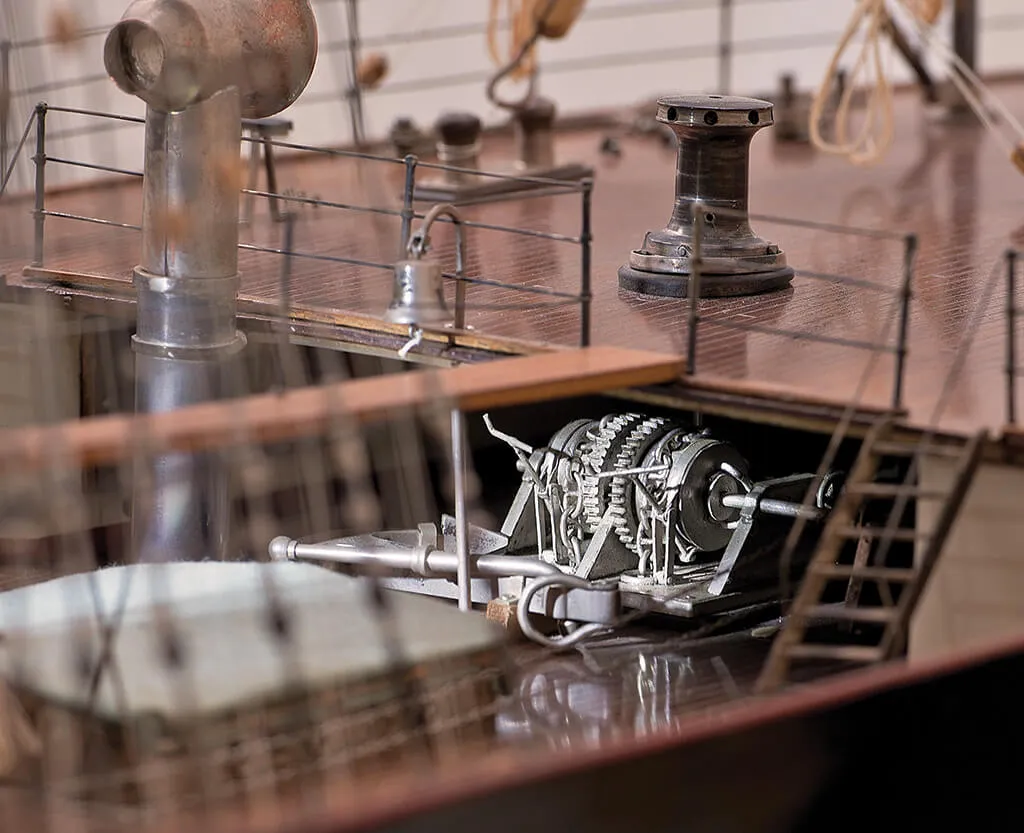
Anchor windlass
A fully functioning anchor windlass in the fo’c’sle head. Further in under the fo’c’sle head there are two chain locks with hand levers, one for each anchor.

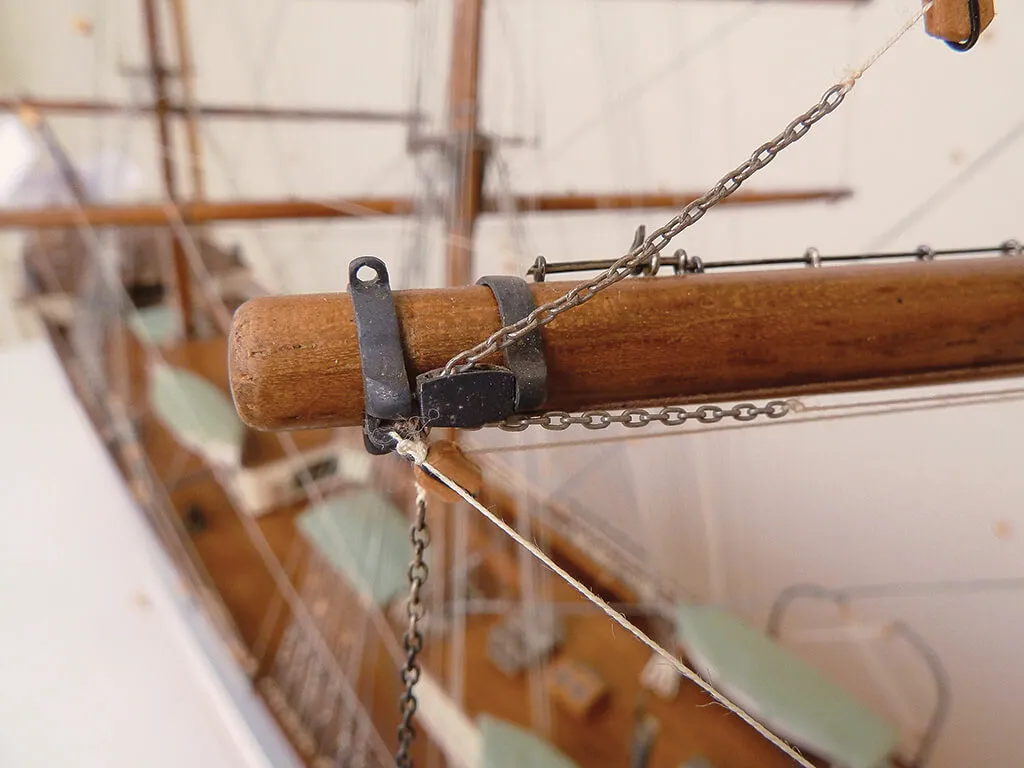
Metal sheet with sheave
One of the yardarms with mounted metal sheet block with sheave. The chain is not made by Runar, but purchased in connection with the assembly of the model in 1954.

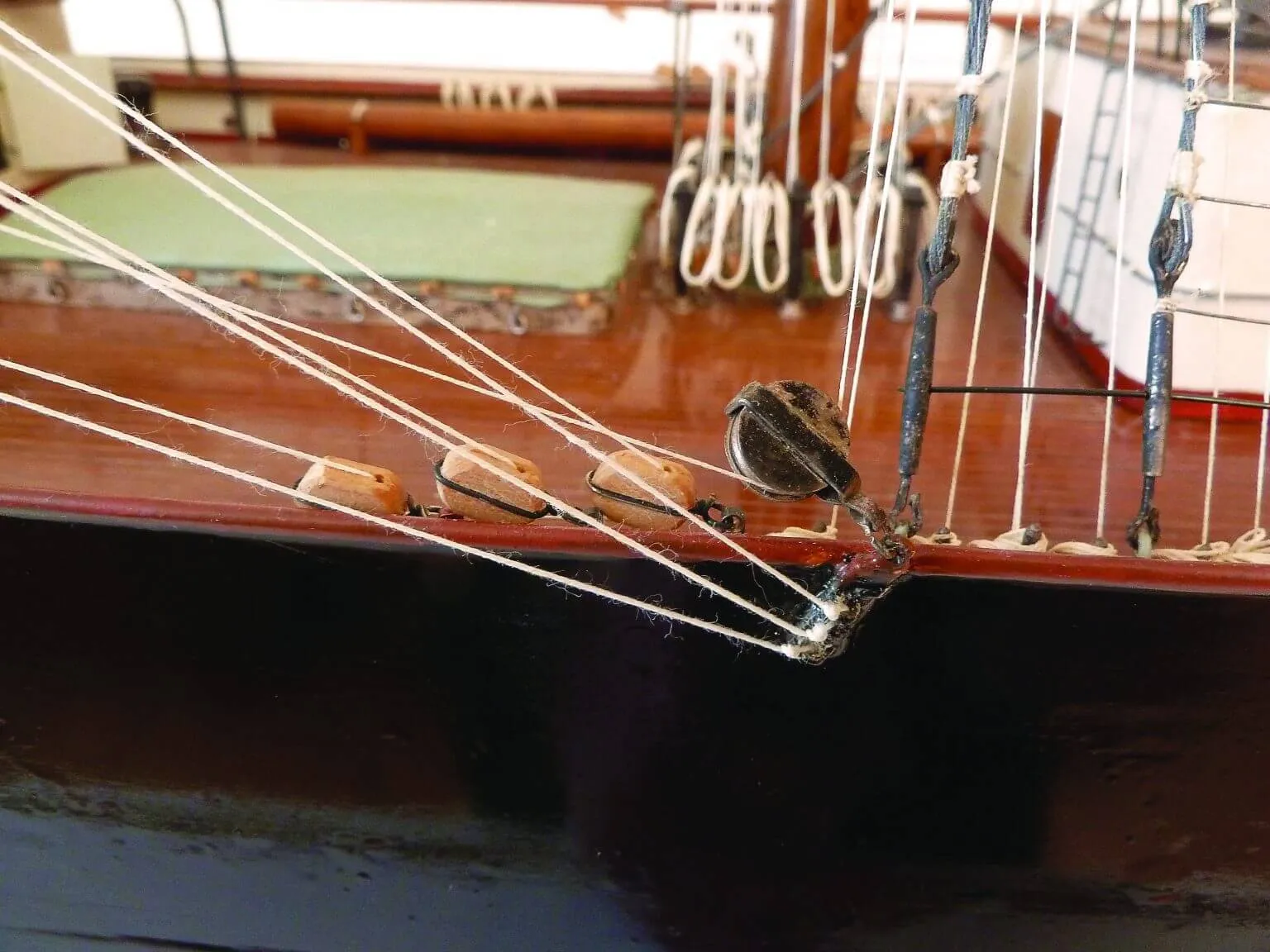
Block
Wooden blocks without movable sheaves and a metal block with movable sheaves.  

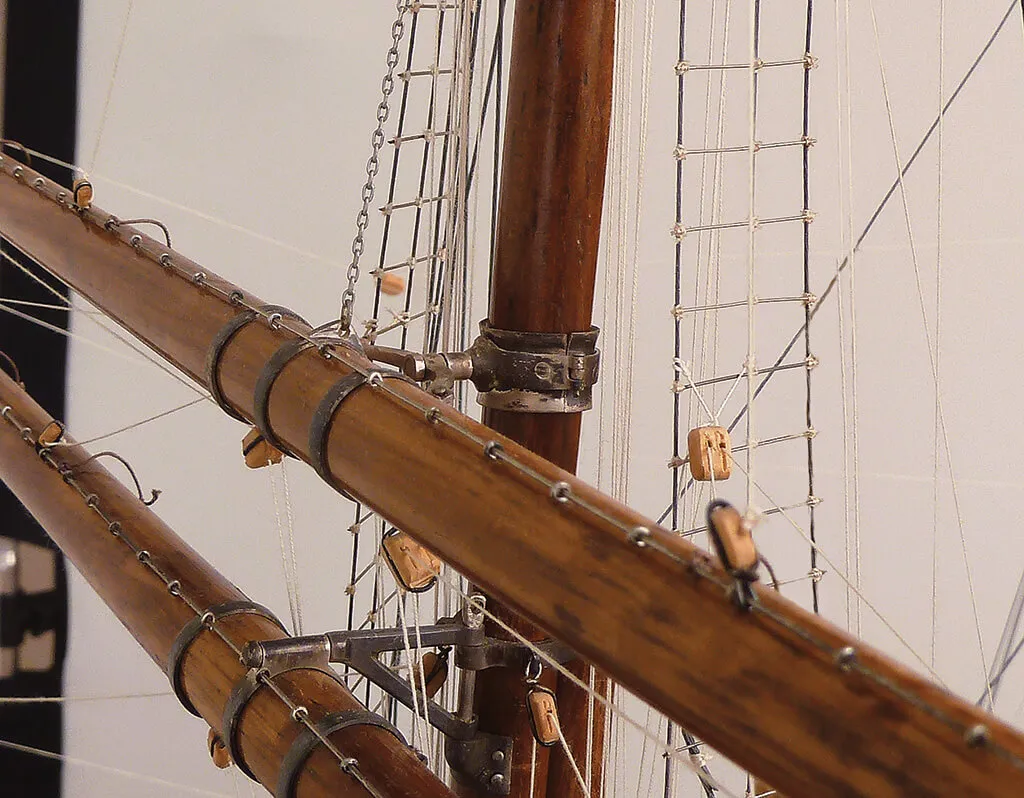
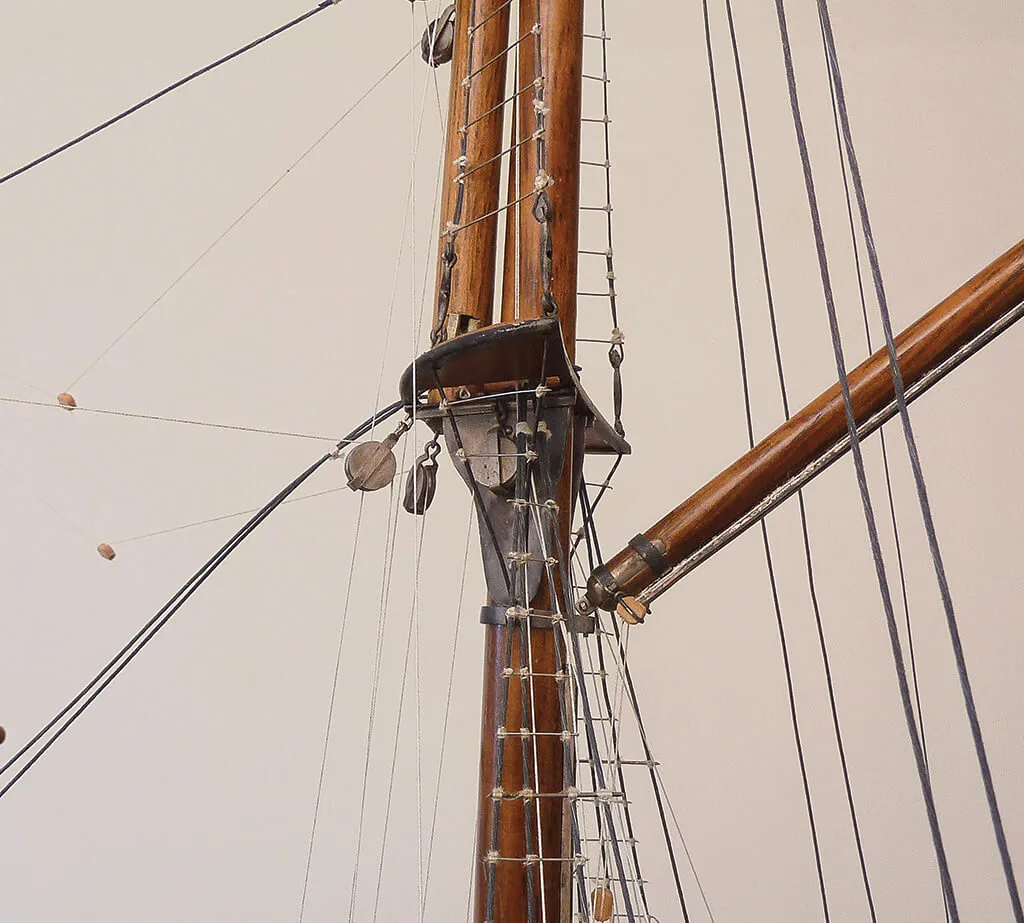
The sliding parrel of the upper topsail yard
The parrel encloses the mast and holds the yard in place. The parrels are openable and consist of two halves joined by hinges.

Jigger mast crosstrees
Angle irons in the longitudinal direction of the model, standing gaff with truss plus the track for the head of the spanker.

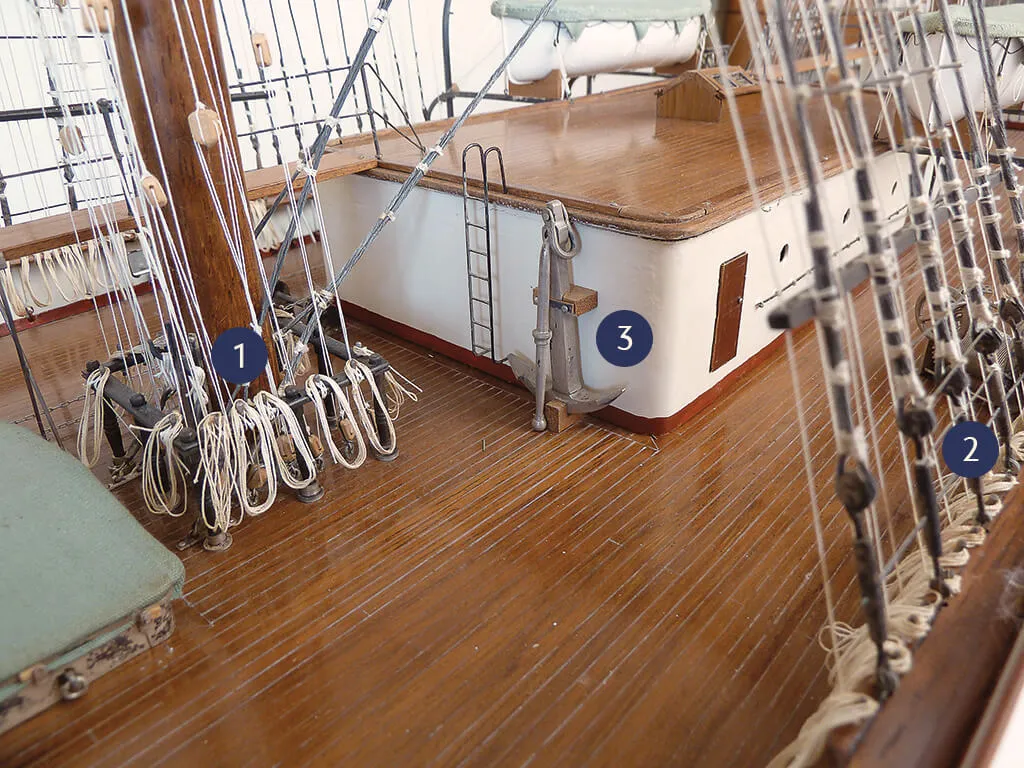
Around the foremast
1. Pin rails and fife rails.
2. Shrouds with functioning turnbuckles and belaying pins.
3. The kedge was used to pull the ship short distances by hand. The kedge was rowed out suspended between two ship's boats and dropped in the direction in which you wanted to move the ship.

Steam winch and donkey boiler. A water tank on the roof.

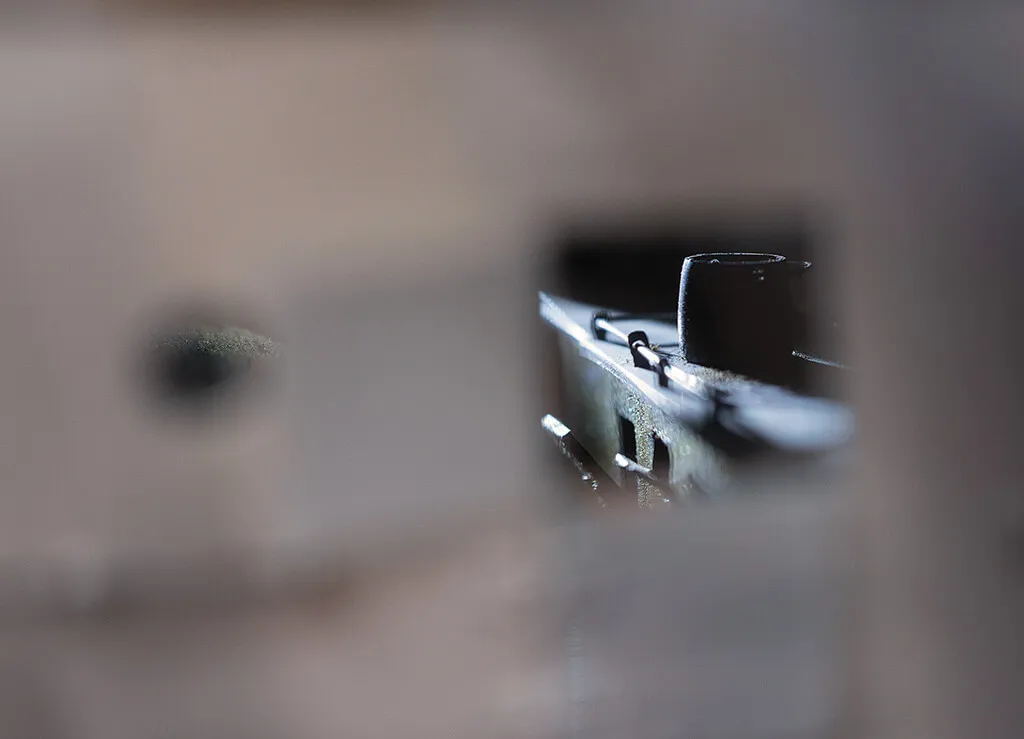
Galley
The pea soup pot seen through the galley hatch-way. The height of the pot is 7 mm.

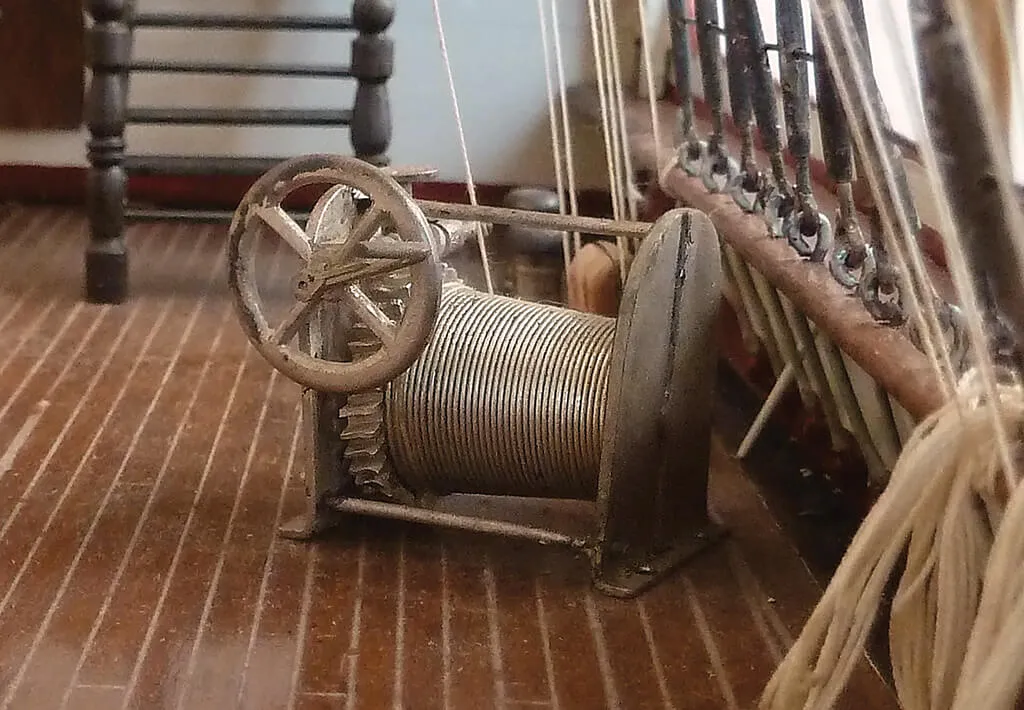
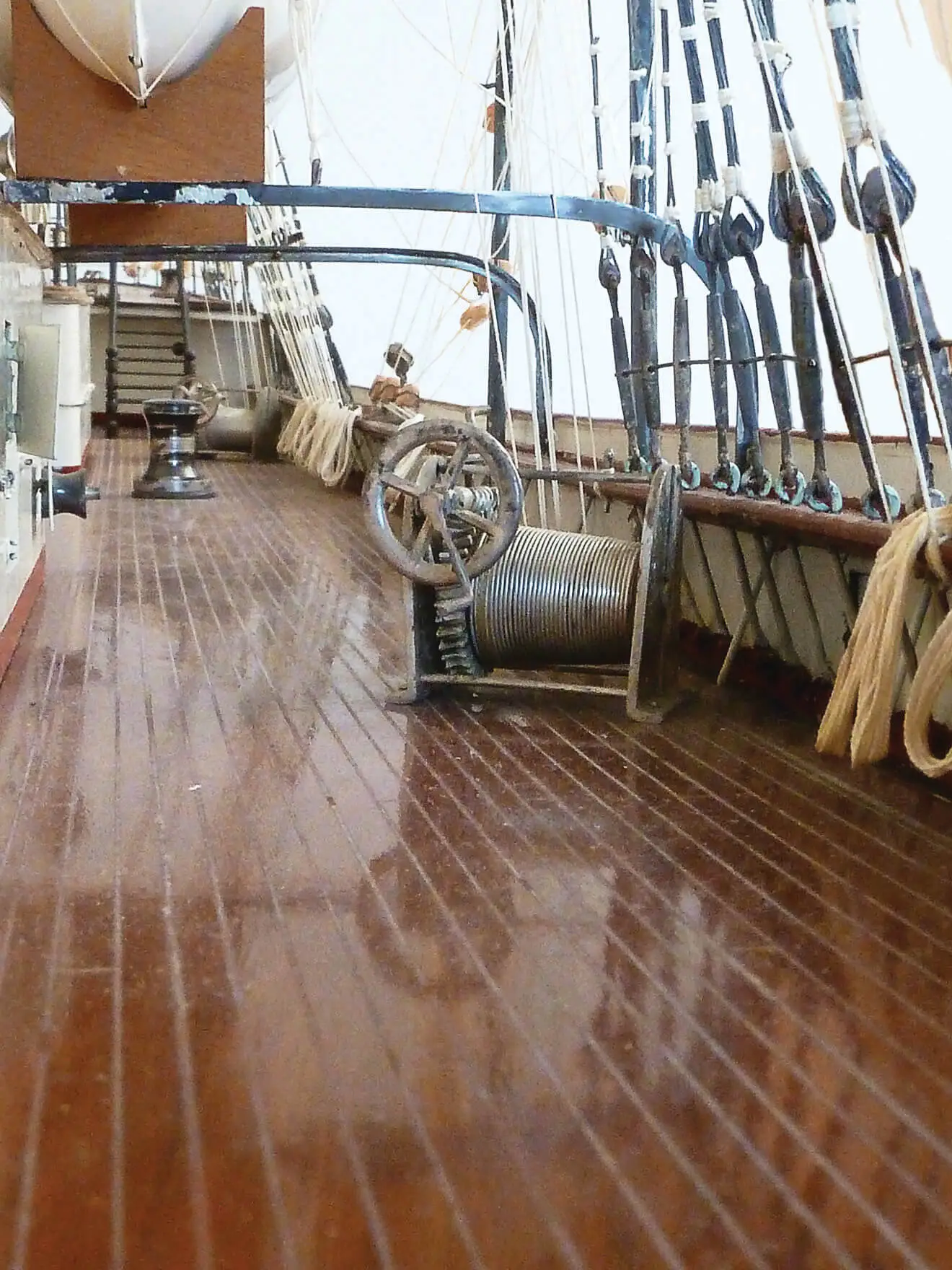
Halliard winch
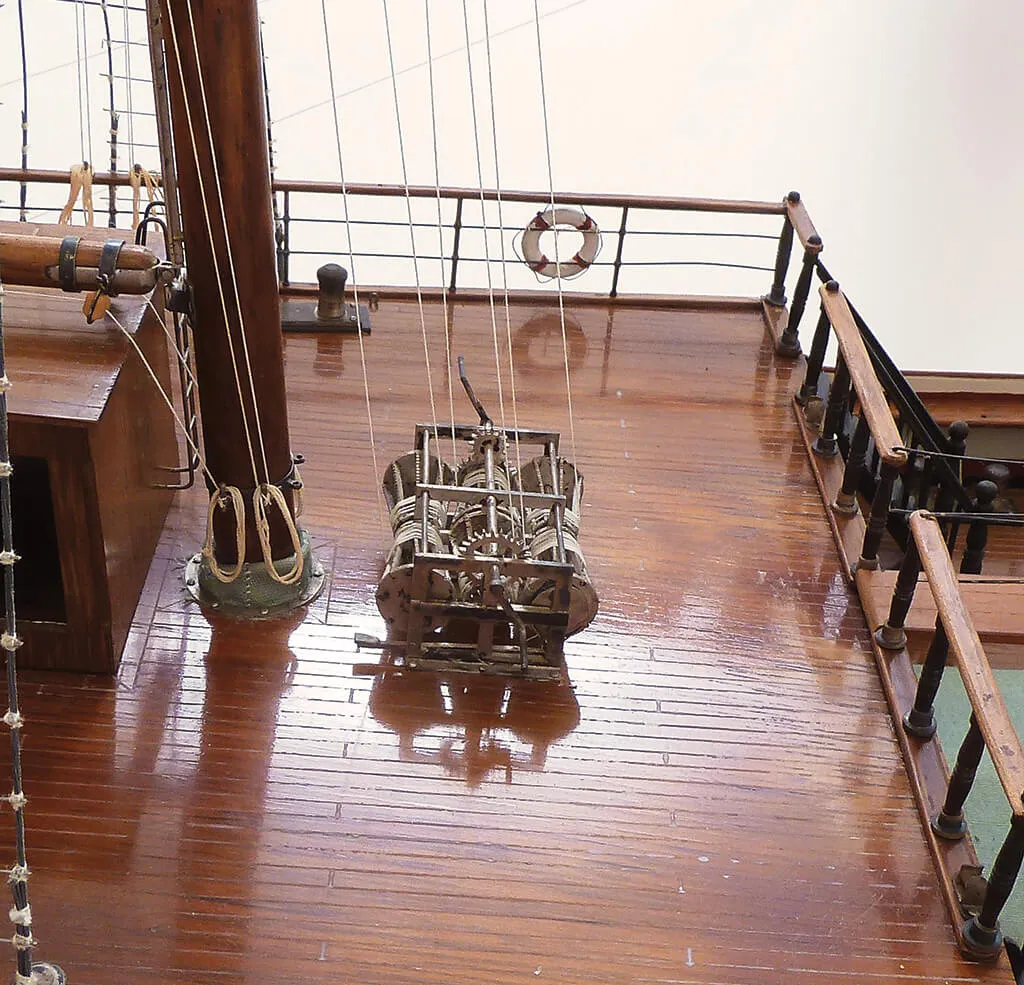
The halliard winches were used for setting sails. The halliard winch on the model is fully functioning.

Brace winch or Jarvis winch
The brace winch is fully functioning and one of three on the model. The winch is built from 82 parts. Also note the canvas mast collar.

Fife rail with bilge pumps
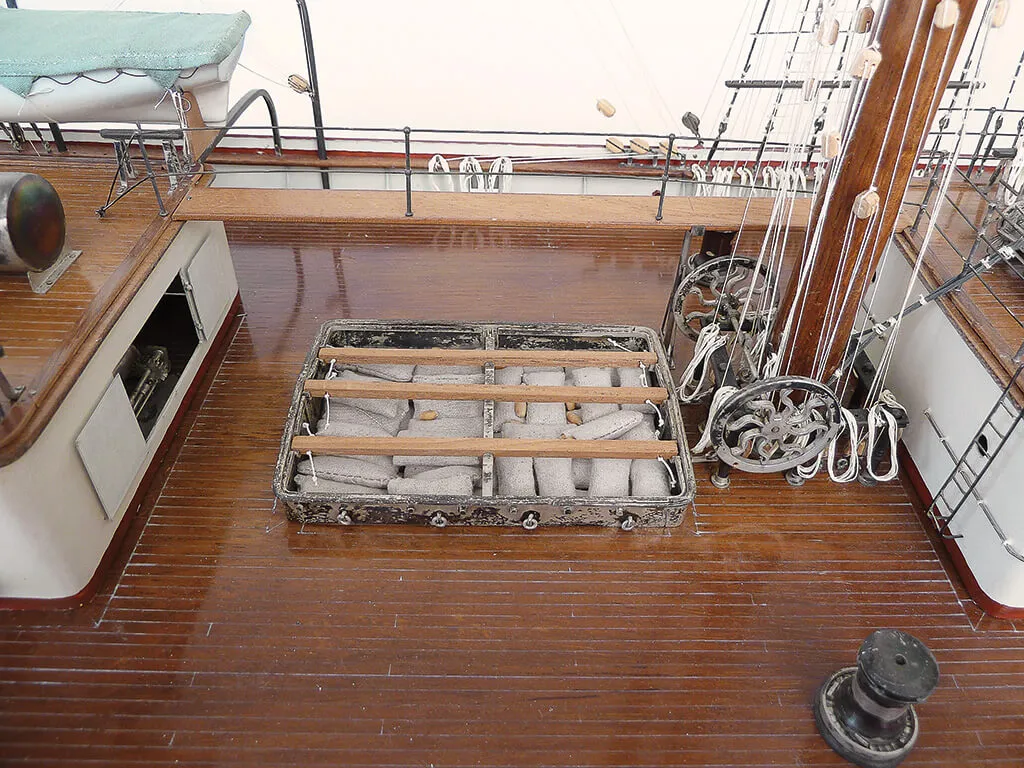
By the fife rail surrounding the mizzen mast are the bilge pumps, which were used to pump water from the ship.

Ladder
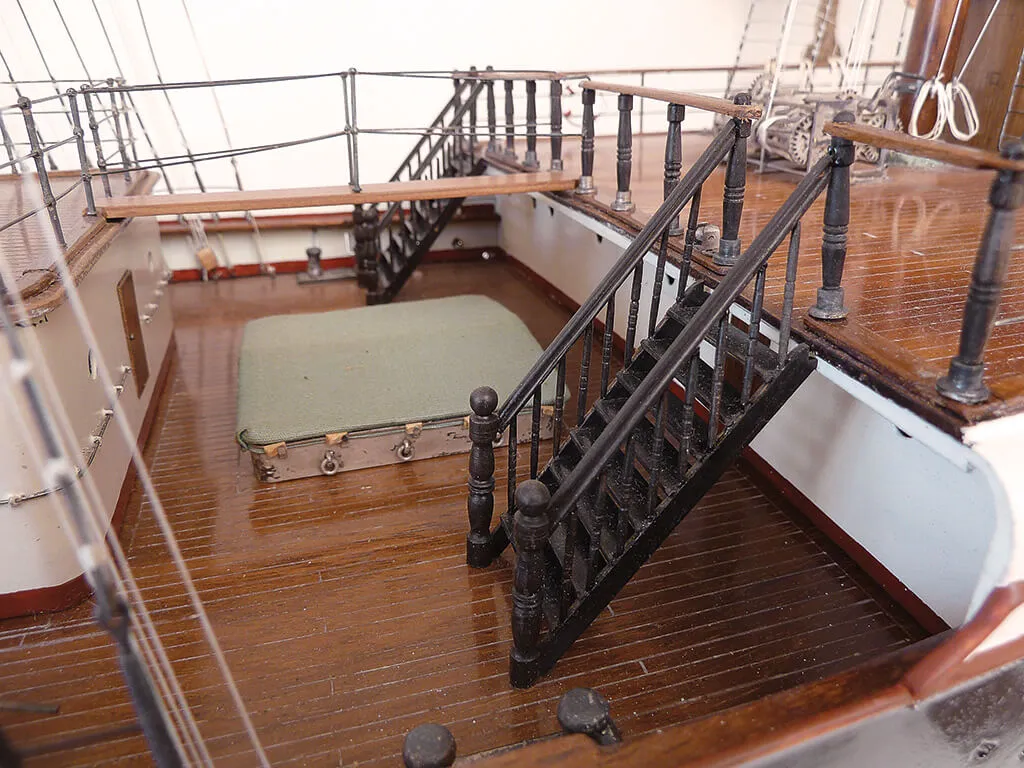
The model's stairs to the poop deck. On the deck in between there is a battened cargo hatch.

Chart house
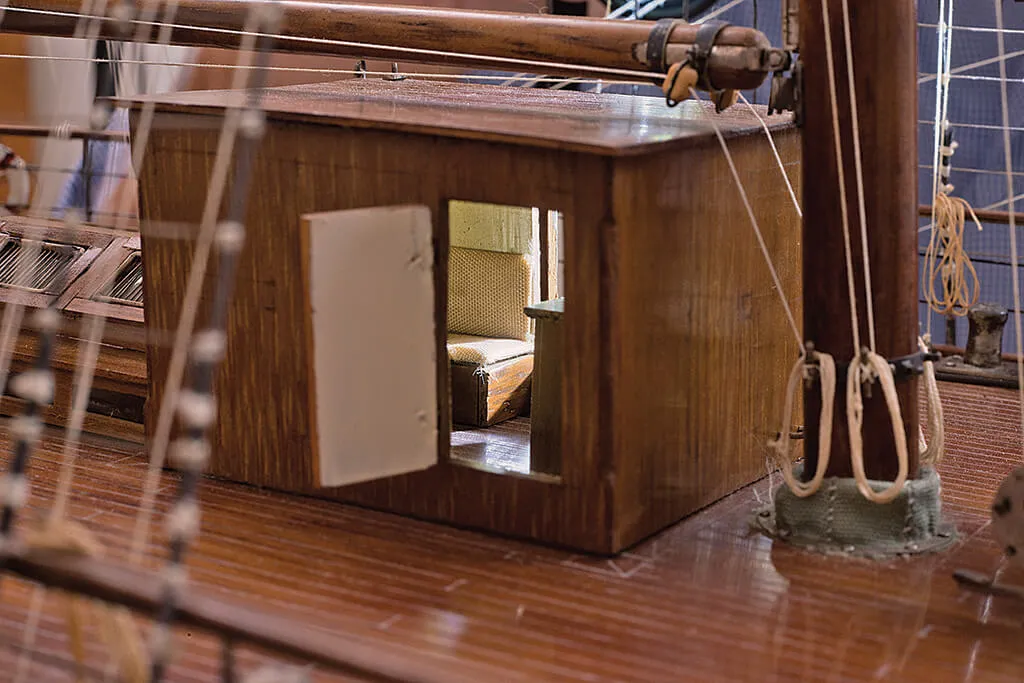
In the chart house is a navigation table and a sofa. A staircase from the deck leads directly down to the captain's saloon.

Binnacle and compass
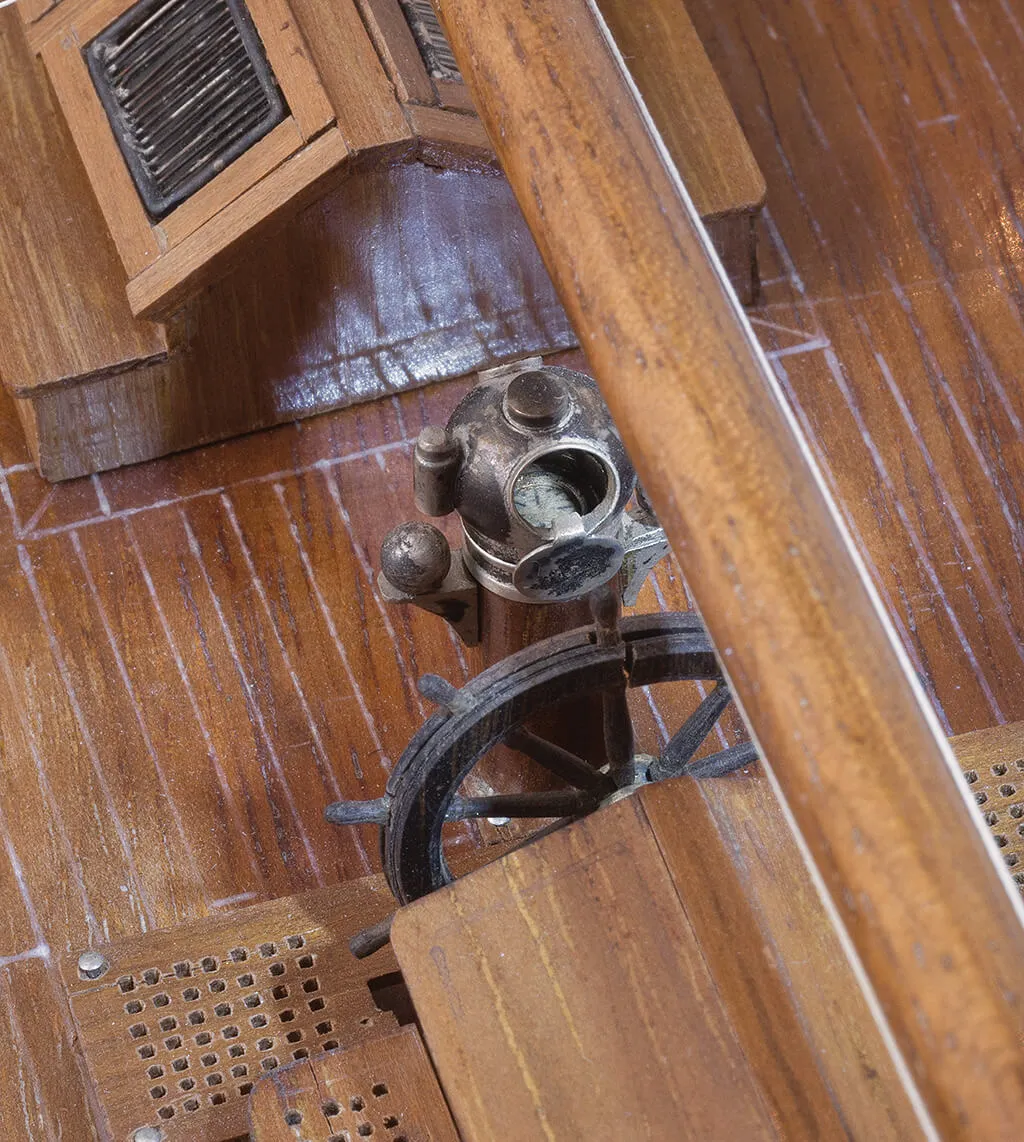
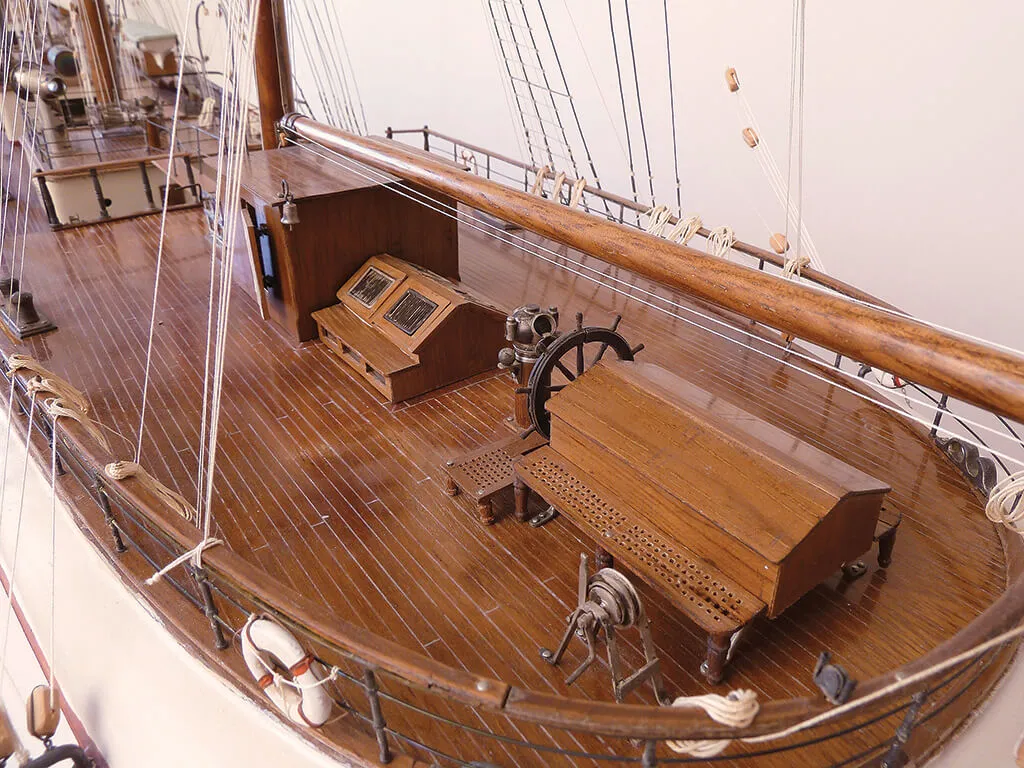
The binnacle of the model with it’s 3.5 mm compass disc on gimbal suspension.

Wheel and wheel box

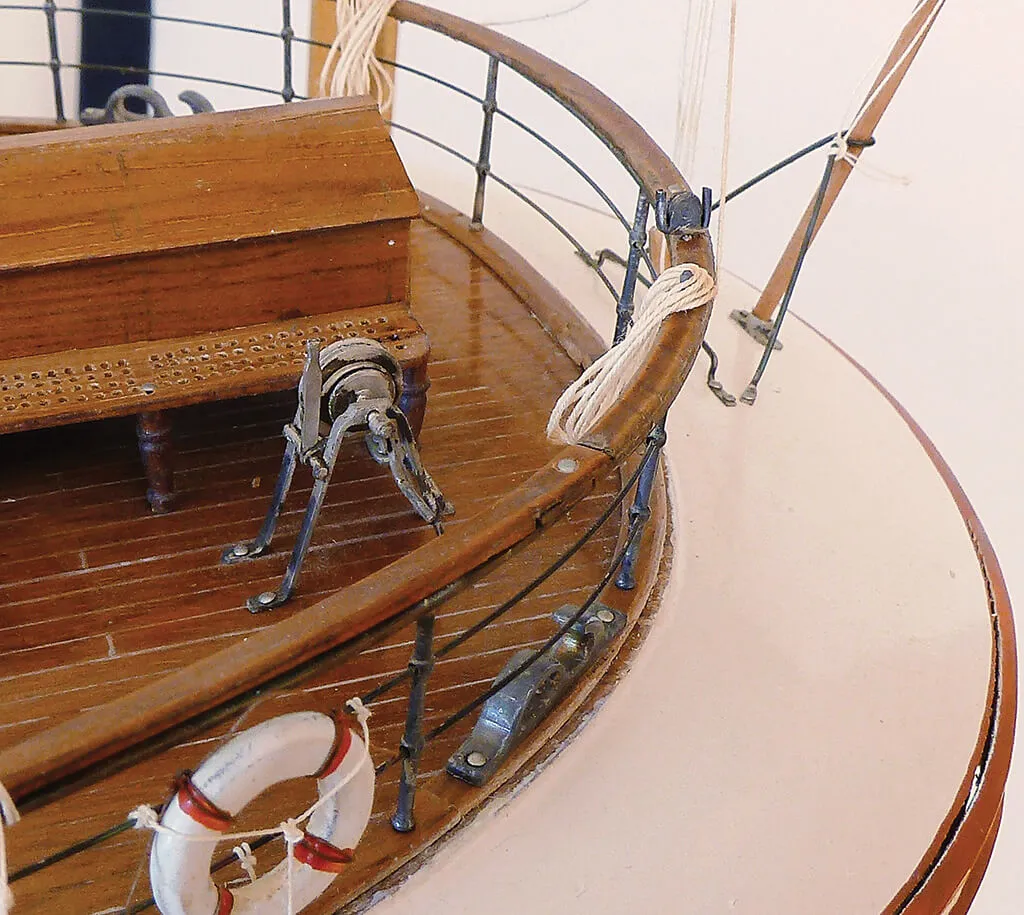
Log winch
The log winch with the log line guide block, which has a movable sheave over which the log line runs.

View from the deck
One might think that the photo shows the rain-soaked deck aboard the sailing ship Ponape, but it is actually a view from the model's deck with a halliard winch in the foreground.

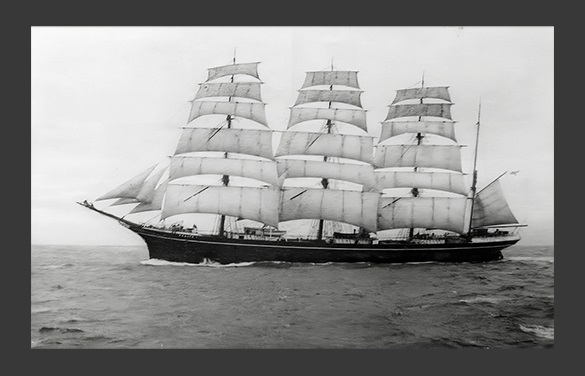
Old photo of the ship Ponape.
  • Svenska
  • Suomi
  • English

The fourmasted barque Ponape

Built in 1903 in Italy
Length: 90.58 m
Width: 12.93 m
Draft: 7.06 m

Ponape was named Regina Elena, but the named changed to Ponape in 1911, when she became part of the fleet of the German shipping company Reederei F. Laeisz, where all ships had names beginning with the letter ‘P’. Pommern also belonged to the same fleet for a time.

Åland shipowner Hugo Lundqvist bought Ponape in 1925 and four years later she was bought by another Ålander, shipowner Gustaf Erikson. During her time in Åland, Ponape sailed faithfully on the grain trade to Australia, until 1936 when she was sold to Latvia for scrapping. The figurehead was preserved and is now on display at the Åland Maritime Museum.

Picture of the model ship Ponape.

The fourmasted barque Ponape

Built in 1903 in Italy
Length: 90.58 m
Width: 12.93 m
Draft: 7.06 m

Ponape was named Regina Elena, but the named changed to Ponape in 1911, when she became part of the fleet of the German shipping company Reederei F. Laeisz, where all ships had names beginning with the letter ‘P’. Pommern also belonged to the same fleet for a time.

Åland shipowner Hugo Lundqvist bought Ponape in 1925 and four years later she was bought by another Ålander, shipowner Gustaf Erikson. During her time in Åland, Ponape sailed faithfully on the grain trade to Australia, until 1936 when she was sold to Latvia for scrapping. The figurehead was preserved and is now on display at the Åland Maritime Museum.

Picture of the model ship Ponape.
PLAN YOUR VISIT
  • Opening hours
  • Tickets
  • Before your visit
  • Groups
  • Guided tours
  • Shop & Café
  • Venue
WHAT'S ON
CHILDREN’S MUSEUM
ABOUT THE MUSEUM
COLLECTIONS
EXHIBITIONS
TALL SHIP POMMERN
CONTACT US
  • Svenska
  • Suomi
  • English
Icon of a house