Skip to content
Logotyp
MENU
Ålands Sjöfartsmuseum
  • MENU

Shipbuilding

Despite shipbuilding never growing into an industry in its own right, hundreds of ships were built here.

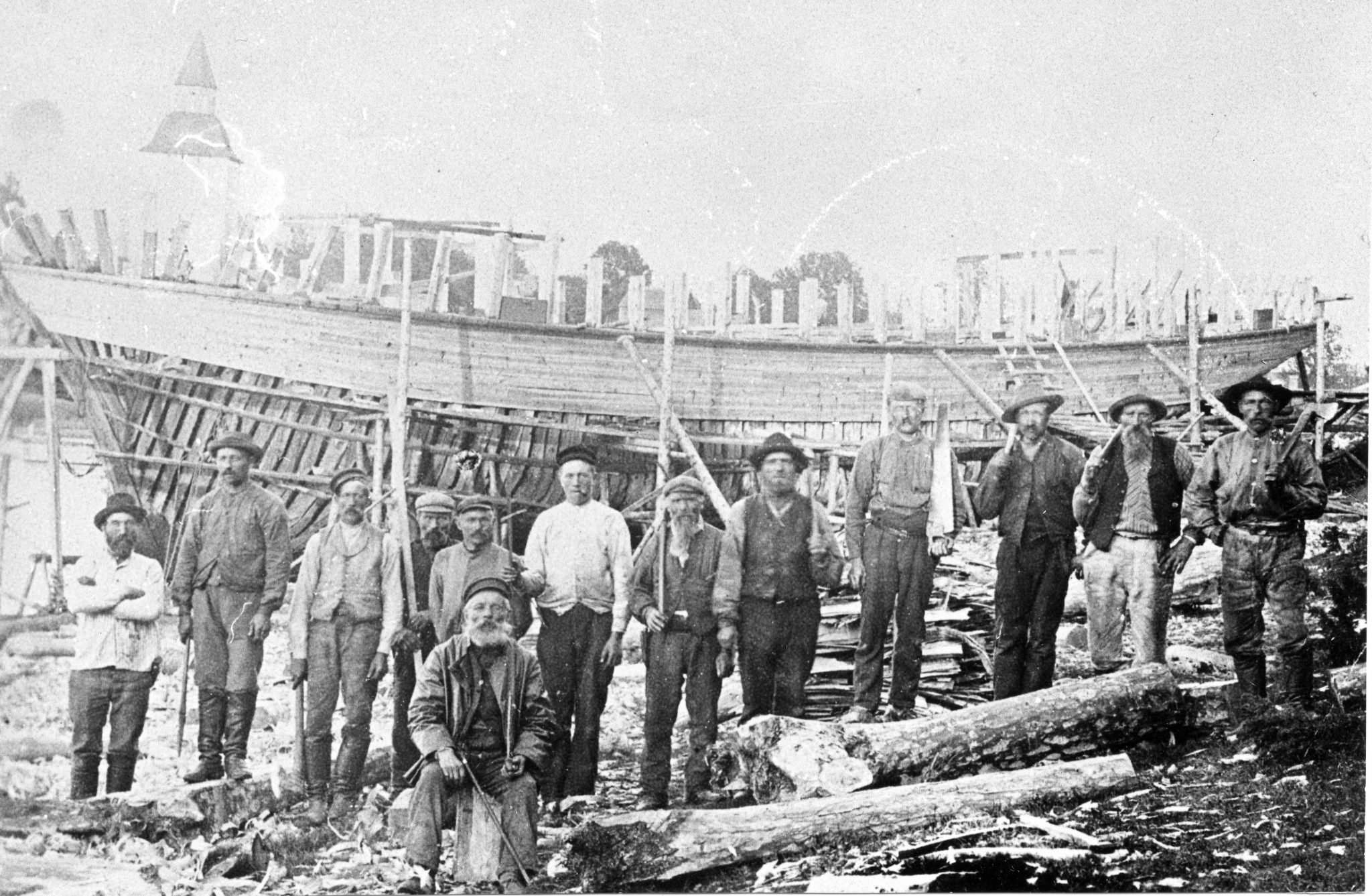
A group of men stand in front of a partially constructed wooden ship, engaged in shipbuilding, with tools in hand, with logs and building materials scattered on the ground.
Carpenters from the schooner Lyckan
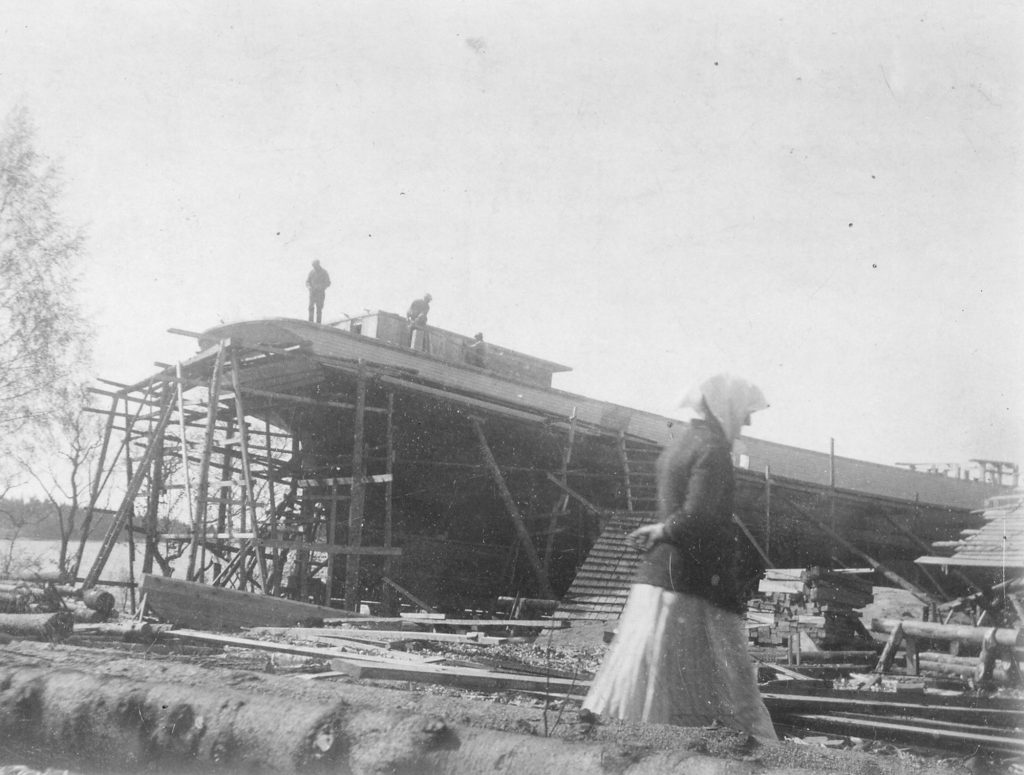
A woman walks past a large wooden structure under construction, reminiscent of traditional shipbuilding, with workers standing on top and materials scattered over the site.
Maux Esperansa’s slipway

At the end of the Crimean War in 1856 there was a boom in the freight markets and a great demand for ships. This led to a period of intense shipbuilding on Åland, which lasted until the 1920s; some 300 vessels were built in this period. In the second half of the 19th century, many ships were also built for Åland investors in western Finland. The initiator of a shipbuilding project would try to attract investors and so form a jointly-owned enterprise. When the shares were fully subscribed, a shipwright was hired and the person with the most shares was designated principal owner. A small boat could be built by a few men but major projects required the labour of 20-30 workers, as well as detailed calculations and drawings. 

The master shipwright held overall responsibility, including the hiring of workers. Among these, carpenters were the most numerous but there were also sawyers, blacksmiths and labourers. When the hull was ready for caulking and sealing extra workers were employed. Women spun oakum, boiled soap and made food while former sailors worked on the rigging and sails. Both spruce and pine were used for shipbuilding. Bent timber was needed for ribs while mast timber had to be straight. The timber came mostly from Åland but was sometimes brought in from Finland or re-used from old ships.

Highlights

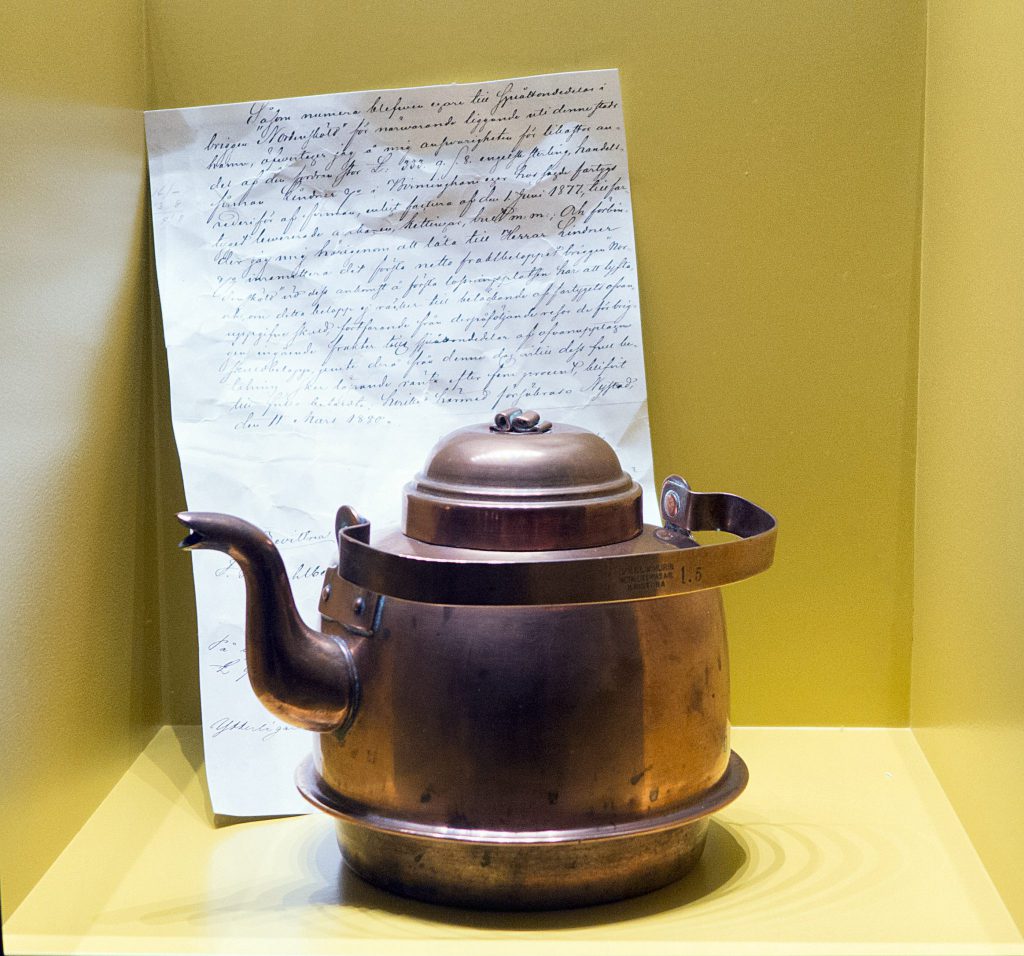
Coffee pots and ship shares

On Åland a coffee pot and a share in a ship were counted among the necessities of life. Shares could be bought but even farmhands and milkmaids could become shareholders in return for labour. This meant that if a successful ship provided a good return, even the landless poor might eventually be able to buy a cow or a small piece of land.

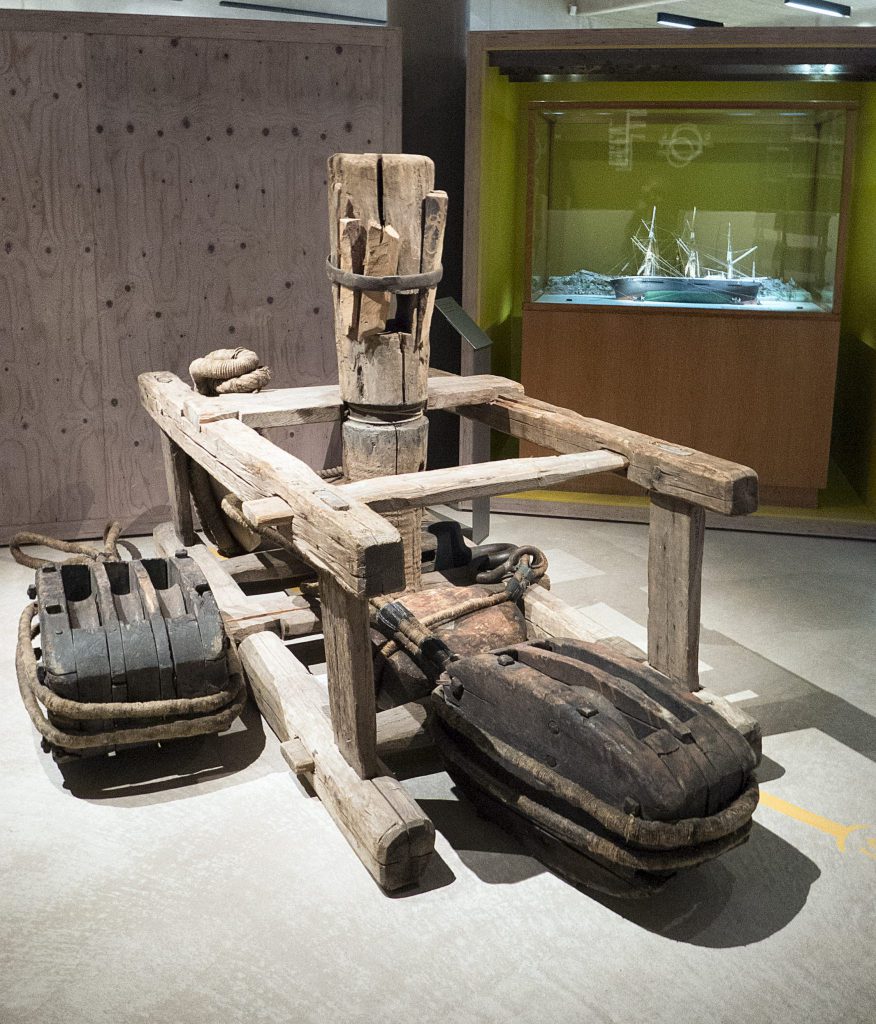
Careening capstan and blocks

It was important that the vessel was well maintained, from hull to rigging. The hull was usually checked in spring, during preparation for the sailing season. The ship would be taken to a careening bay and tipped onto its side with the help of careening blocks; this made it possible to inspect the parts that were usually below the waterline. Sometimes major repairs were necessary, but often it was just a case of cleaning, re-caulking, sealing and painting before repeating the procedure on the other side.

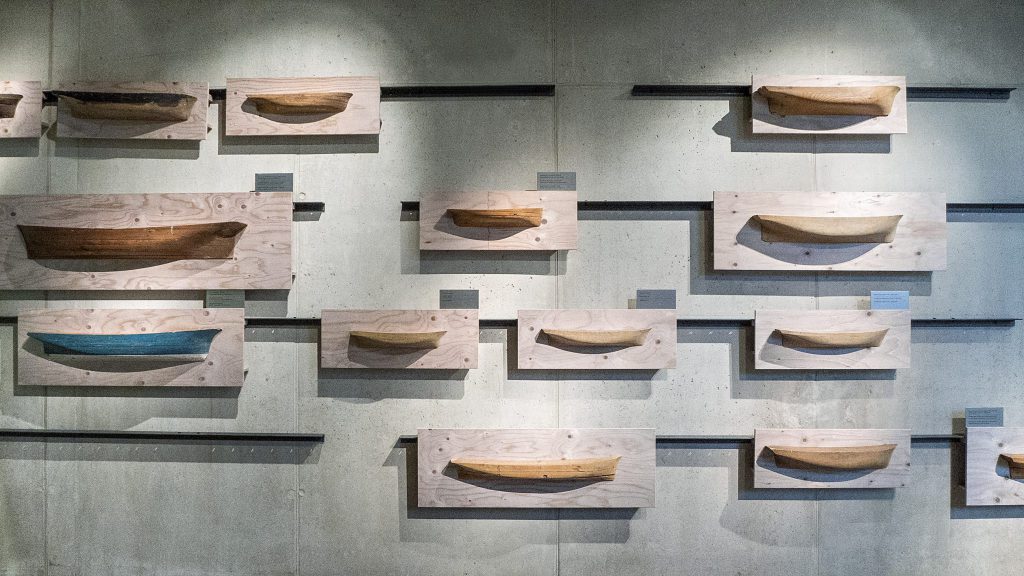
Half models

An Åland shipwright begun each new building project by making a half model, from which he made his calculations. This was a method that didn’t require much theoretical knowledge in shipbuilding. What was needed was a keen eye for form and function as you had to build a ship that could both take a big cargo and sail fast, a not too easy equation. In addition, the ship should be beautiful too. The Åland Maritime Museum’s collection of half models is an extensive one. The oldest model was made in the 1860s by master shipwright Lars Holmström, who built the barques Preciosa and Flora among others. The newest is Johan August Henriksson’s model of the barque Fred from 1920.

A vintage copper cauldron with lid and handle is displayed in front of an old handwritten letter against a yellow background – a charming nod to the era of traditional shipbuilding craftsmanship.
Coffee pots and ship shares
A large wooden anchor, manufactured with Skeppsbyggnad's expertise, has thick arms and blocks. It is displayed indoors on a concrete floor near an exhibition stand with a detailed ship model.
Careening capstan and blocks
A display of several half-hull boat models, showcasing the art of shipbuilding, are mounted on wooden planks and arranged on a concrete wall, each with an individual label.
Half models

More exhibitions

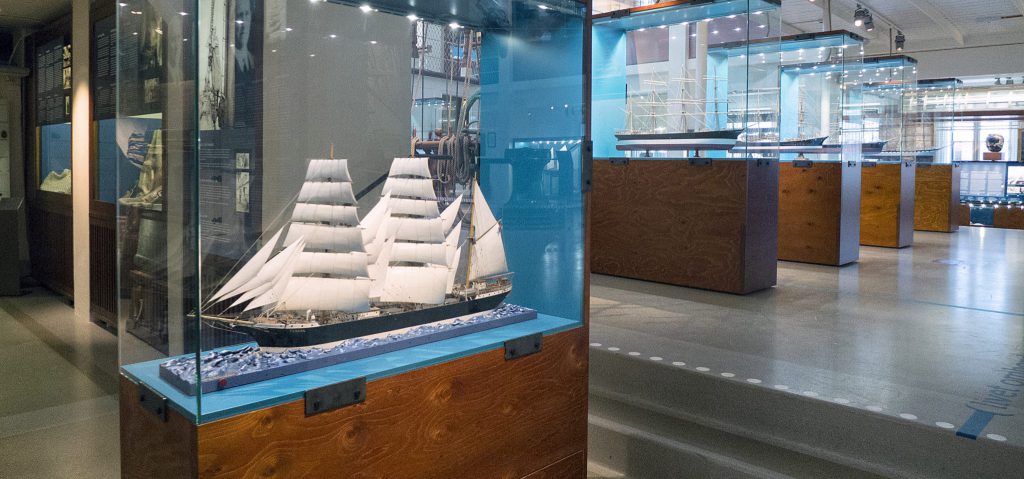
A model sailing ship on display in a glass case at a maritime museum, among other impressive ship models in the Exhibitions.

The Sailing Ship Era

Since time immemorial, sailing has been the Åland way of voyaging across the seas, and Mariehamn was the home port for the world’s last fleet of tall ships.​

Read more »
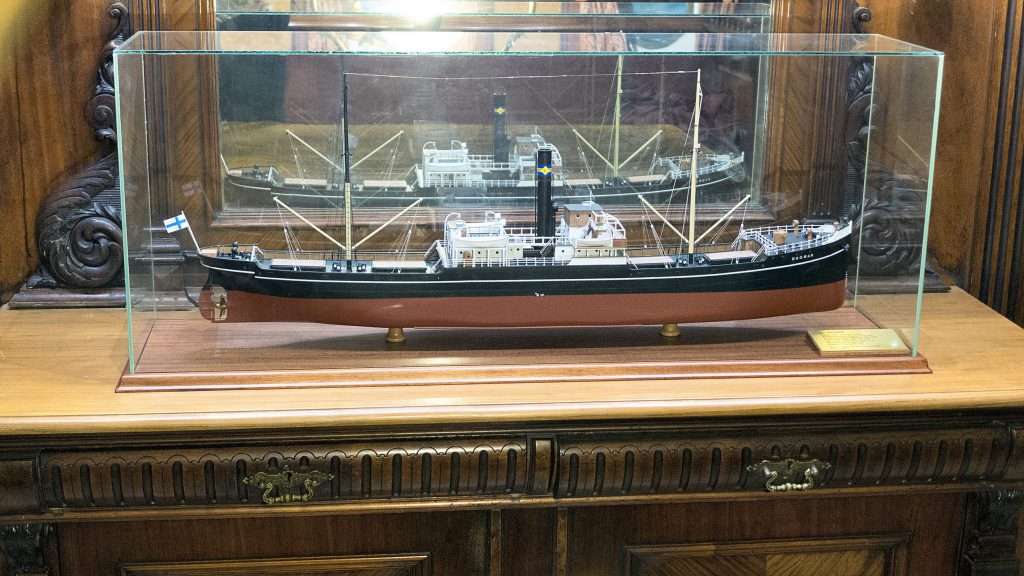
A detailed model steamship, a tribute to Machine Seafaring, is displayed in a glass case on a wooden cabinet, with a mirrored background reflecting the ship.

Engine-powered shipping

Engine-powered shipping was late in coming on Åland but once it had been established, it became the motor for modernizing Åland society at large.
Read more »
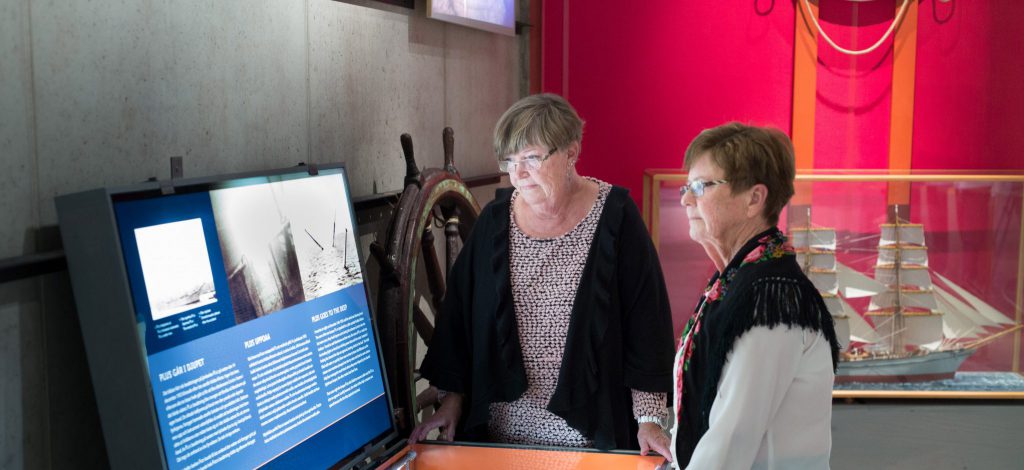
Two elderly women read information on a display about maritime safety at a maritime museum, with a model ship and a ship's steering wheel visible in the background.

Safety at Sea

The sea and the wind are powerful natural elements that no human can tame. That said, there is plenty that can be done to promote safety on board and ashore.
Read more »
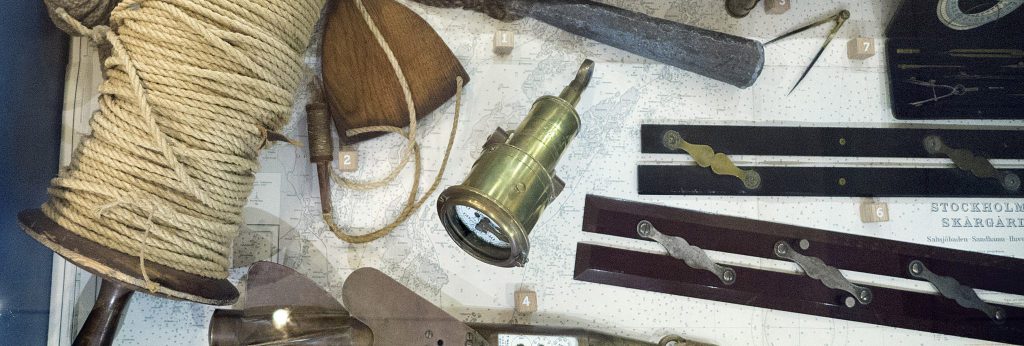
A display case with navigational tools and equipment, including a rope reel, wooden and metal instruments, a brass compass and map fragments.

Navigation

Compass, chronometre, sextant, log and sea charts are in principally all a navigator needs to determine position and follow a set course.
Read more »
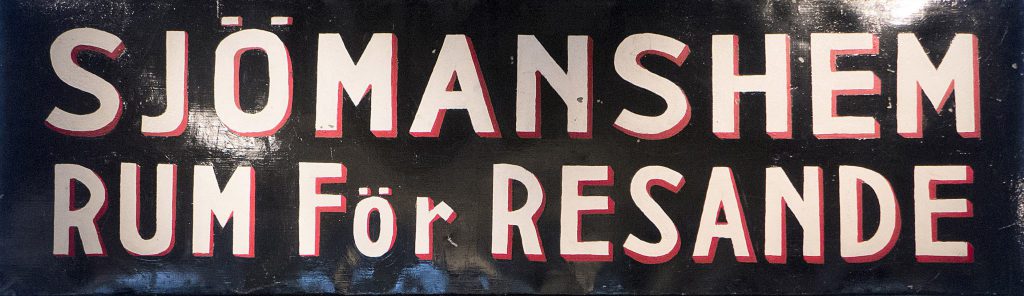
A black sign with white and red text that says SJÖMANsHEM ROOM FOR TRAVELERS in Swedish, seen in Mariehamn.

Maritime Mariehamn

From the founding of Mariehamn in 1861 it has been a maritime town. This is were the professional shipping industry developed and this is were successful master mariners build their splendid homes.
Read more »
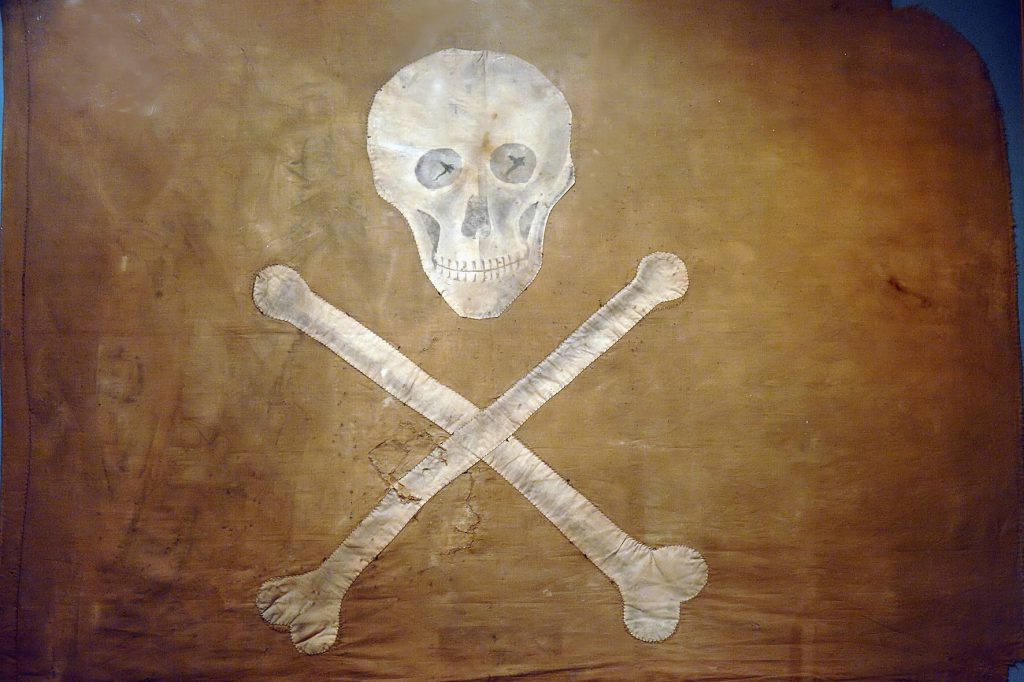
A weathered pirate flag from the Cabinet of Curiosities, with a white skull and crossbones against a brown background.

Cabinet of Curiosities

A cabinet of curiosities is made up of an eclectic collection of object that becomes a representation of all the world’s wonders and oddities in miniature.
Read more »
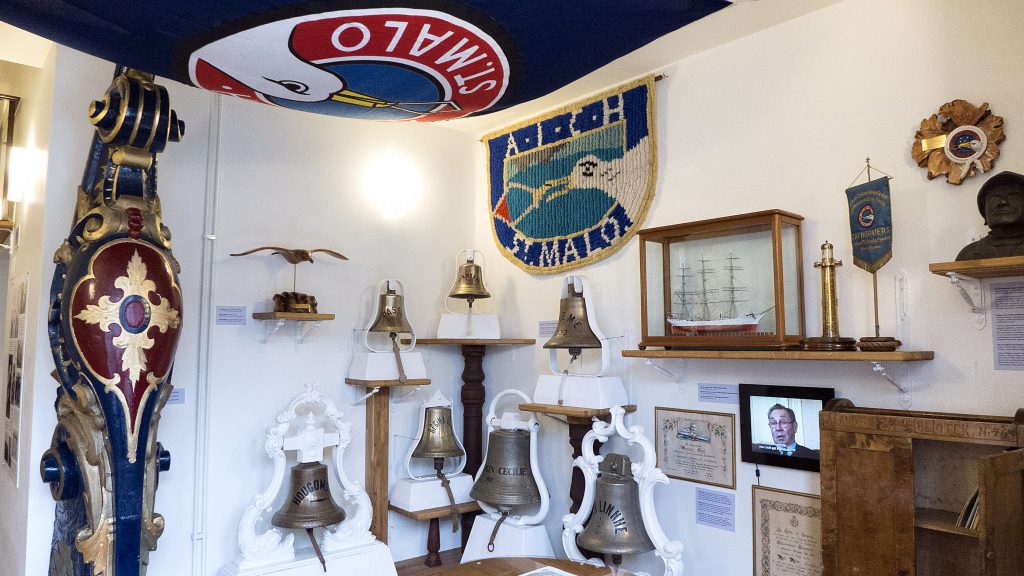
A museum room displays ship's clocks, plaques, nautical memorabilia, a model ship, a bust, a woven banner and a TV screen showing a person's face – celebrating maritime history and legends like those who braved Cape Horn.

The Cape Horn Room

Amicale Internationale des Capitaines au Long Cours de Cape Horniers was an exclusive club for seafarers who had rounded the notorious Cape Horn in a cargo-carrying sailing vessel.

Read more »
FOLLOW US!
Facebook-f Instagram Tripadvisor

Åland Maritime Museum

ADDRESS HAMNGATAN 2 MARIEHAMN
TEL +358 (0)18 19 930
EMAIL info@sjofartsmuseum.ax

THE TRUST
ACCESSIBILITY
OUR PARTNERS
SUPPORT US
CONTACT US

© ÅLANDS SJÖFARTSMUSEUM 2026 – DESIGN APRIL KOMMUNIKATION

PLAN YOUR VISIT
  • Opening hours
  • Tickets
  • Before your visit
  • Groups
  • Guided tours
  • Shop & Café
  • Venue
WHAT'S ON
CHILDREN’S MUSEUM
ABOUT THE MUSEUM
COLLECTIONS
EXHIBITIONS
TALL SHIP POMMERN
CONTACT US
  • Svenska
  • Suomi
  • English
Icon of a house
PLAN YOUR VISIT
  • Opening hours
  • Tickets
  • Before your visit
  • Groups
  • Guided tours
  • Shop & Café
  • Venue
WHAT'S ON
CHILDREN’S MUSEUM
ABOUT THE MUSEUM
COLLECTIONS
EXHIBITIONS
TALL SHIP POMMERN
CONTACT US
  • Svenska
  • Suomi
  • English
Icon of a house