Skip to content
Logotyp
MENU
Ålands Sjöfartsmuseum
  • MENU

Navigation

Compass, chronometre, sextant, log and sea charts are in principally all a navigator needs to determine position and follow a set course.

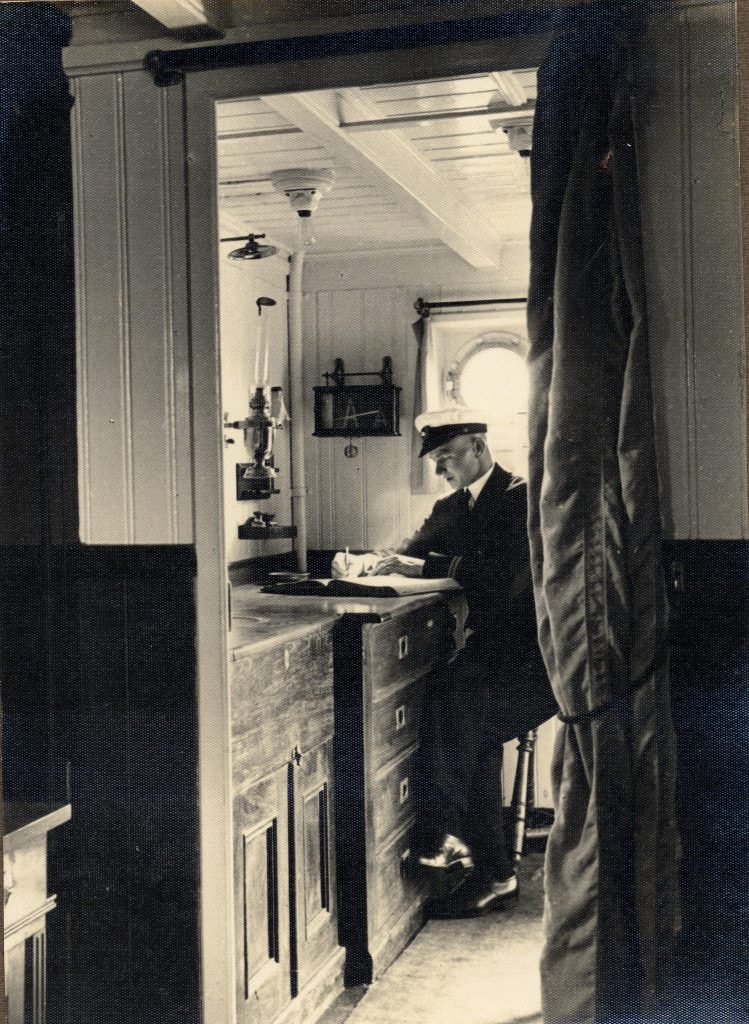
The second in the navigation cabin HC
Mate in the charter house on board the Herzogin Cecilie
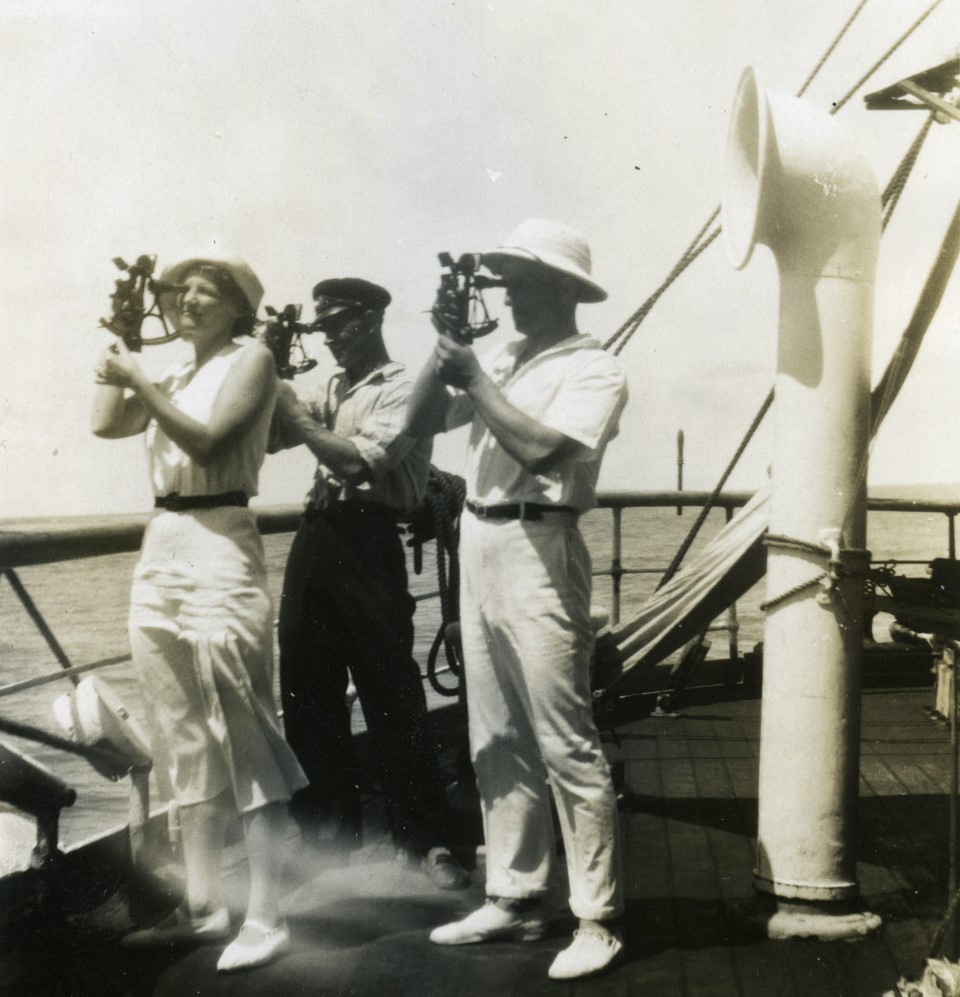
Three people stand on a ship's deck and use sextants for navigation; the sea and part of the ship's structure are visible in the background, highlighting their skillful approach to classical navigational methods.
Shooting the sun on board the four-masted barque Herzogin Cecilie

In older days, navigation was imprecise. Near the coast, navigators could rely on various landmarks to determine their position but out at sea they were more vulnerable. Even if the sailors had access to instruments such as compass, quadrant and astrolabe, these aids were not always reliable. When weather conditions prevented astronomical observations, sailing by dead reckoning was the only option. The captain calculated how far the ship had travelled from a certain point and then estimated the direction of travel. Based on this he drew a line on the chart and reach an estimated position. This was a very unreliable method since there were so many factors that could affect the outcome: currents, waves, winds, calculation errors and the difficulty of keeping to a set course in heavy seas.

Advanced astronomical navigation developed rapidly during the 18th and 19th centuries. The understanding of the compass and of magnetic declination and deviation deepened. The sextant and the chronometer were invented, both necessary to determine latitude and longitude. The chronometer, which de facto is a normal watch, was a particularly significant invention as it made it possible to reliably determine longitude at sea. The scope of the longitude problem was such that the British parliament in 1714 signed the Longitude Act, in which a prize was promised to whomever invented a reliable method for calculating longitude at sea. The problem was eventually solved by watchmaker Johan Harrison, who in 1761 presented the chronometer H4, a seaworthy precision watch, to the Longitude Board. H4 and its three predecessors can be seen at the Royal Observatory in Greenwich, UK.

Highlights

Instrument room

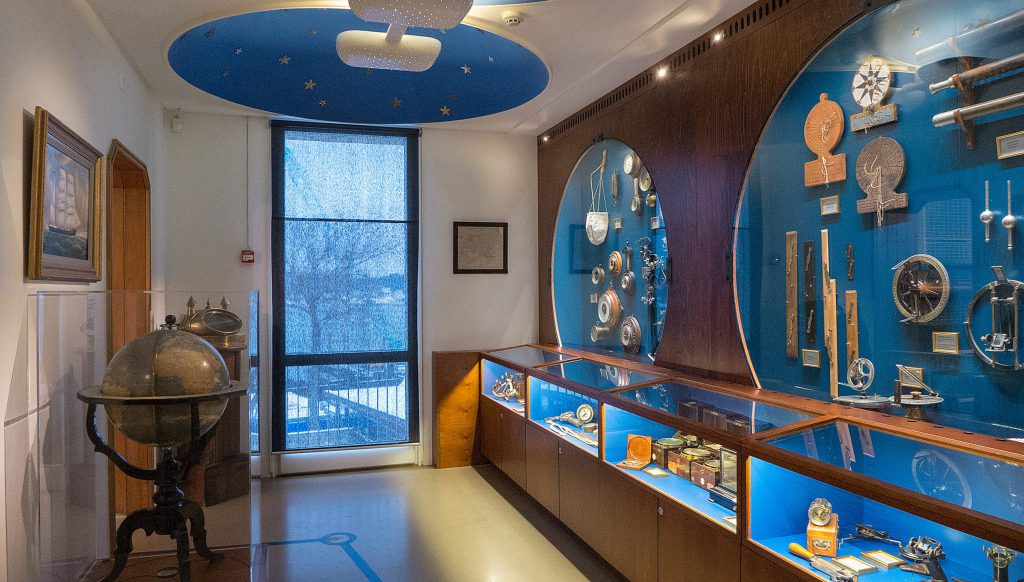
The instrument room displays our extensive collection of navigational instruments. In addition to the obvious sextants and chronometers we also show lesser-known instruments, such as the azimuth, salinometer, hydrometer and anemometer.

Night sky

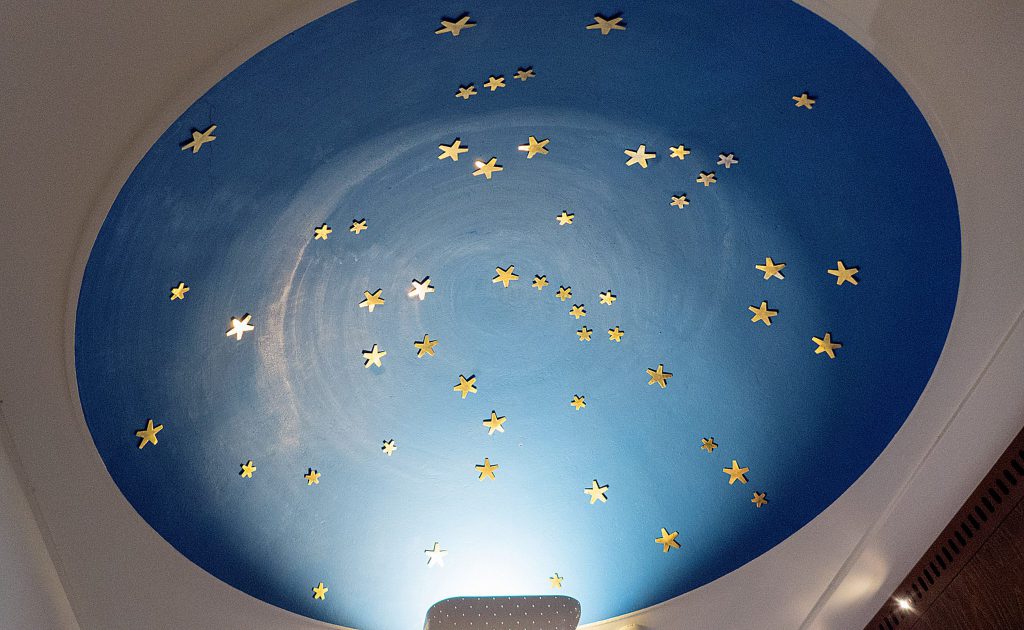
The night sky that adorns the ceiling in the instrument room is one of the building’s original features. The two domes represent the north and south skies and among the brass constellations you can find both the Stella Polaris and the Southern Cross.

A museum exhibition displays navigational instruments and maritime artefacts in glass cases, with a globe and framed artwork visible in the room, highlighting the development of navigation throughout history.
Instrument room
A blue circular ceiling painting with golden star shapes scattered across, resembling a night sky or constellation pattern, evokes the timeless art of navigating by starlight.
Night sky

More exhibitions

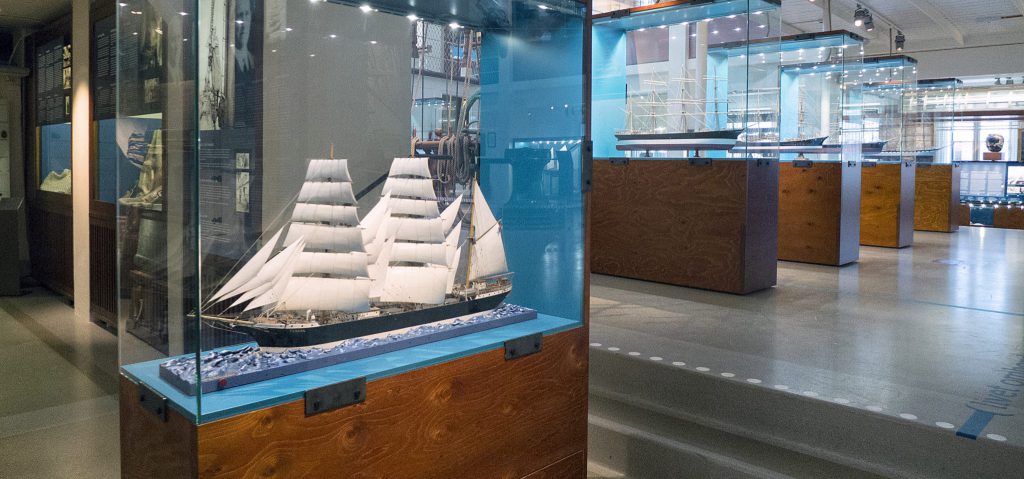
A model sailing ship on display in a glass case at a maritime museum, among other impressive ship models in the Exhibitions.

The Sailing Ship Era

Since time immemorial, sailing has been the Åland way of voyaging across the seas, and Mariehamn was the home port for the world’s last fleet of tall ships.​

read more »
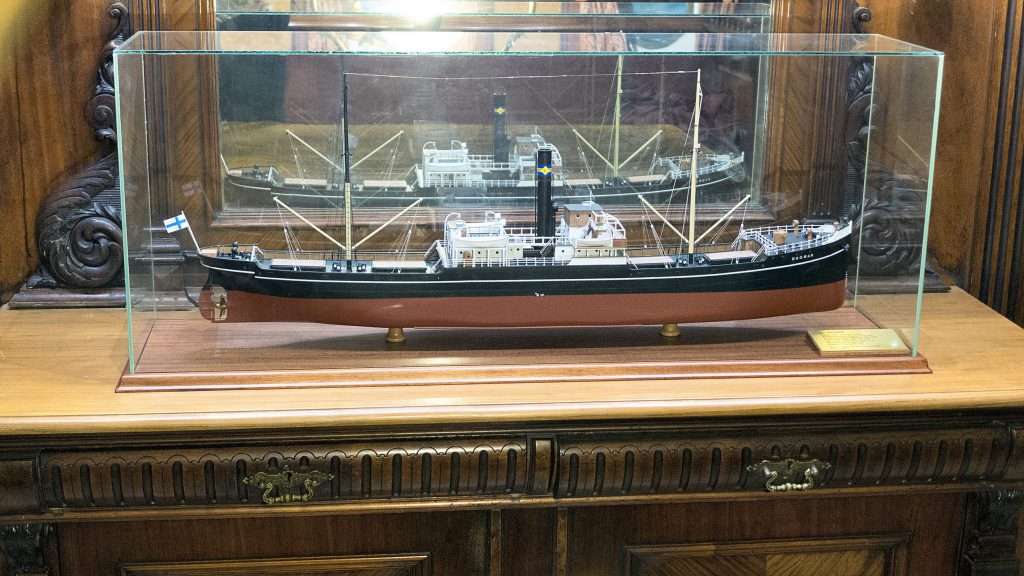
A detailed model steamship, a tribute to Machine Seafaring, is displayed in a glass case on a wooden cabinet, with a mirrored background reflecting the ship.

Engine-powered shipping

Engine-powered shipping was late in coming on Åland but once it had been established, it became the motor for modernizing Åland society at large.
read more »
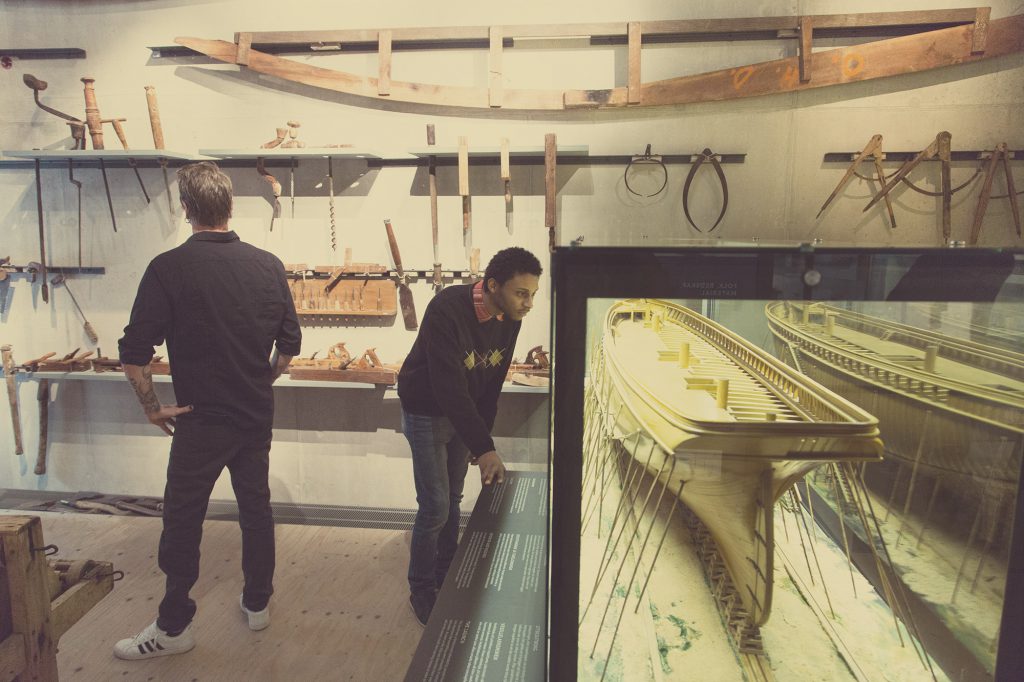
Two people look at a museum exhibit reminiscent of a cabinet of curiosities, with woodworking tools on the wall and a detailed model ship model in a glass case.

Shipbuilding

Despite shipbuilding never growing into an industry in its own right, hundreds of ships were built here.
read more »
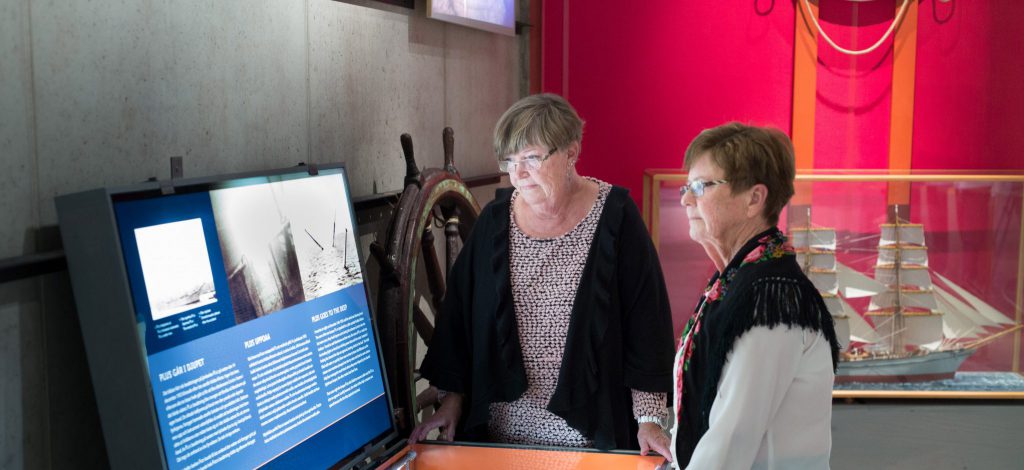
Two elderly women read information on a display about maritime safety at a maritime museum, with a model ship and a ship's steering wheel visible in the background.

Safety at Sea

The sea and the wind are powerful natural elements that no human can tame. That said, there is plenty that can be done to promote safety on board and ashore.

read more »
A black sign with white and red text that says SJÖMANsHEM ROOM FOR TRAVELERS in Swedish, seen in Mariehamn.

Maritime Mariehamn

From the founding of Mariehamn in 1861 it has been a maritime town. This is were the professional shipping industry developed and this is were successful master mariners build their splendid homes.
read more »
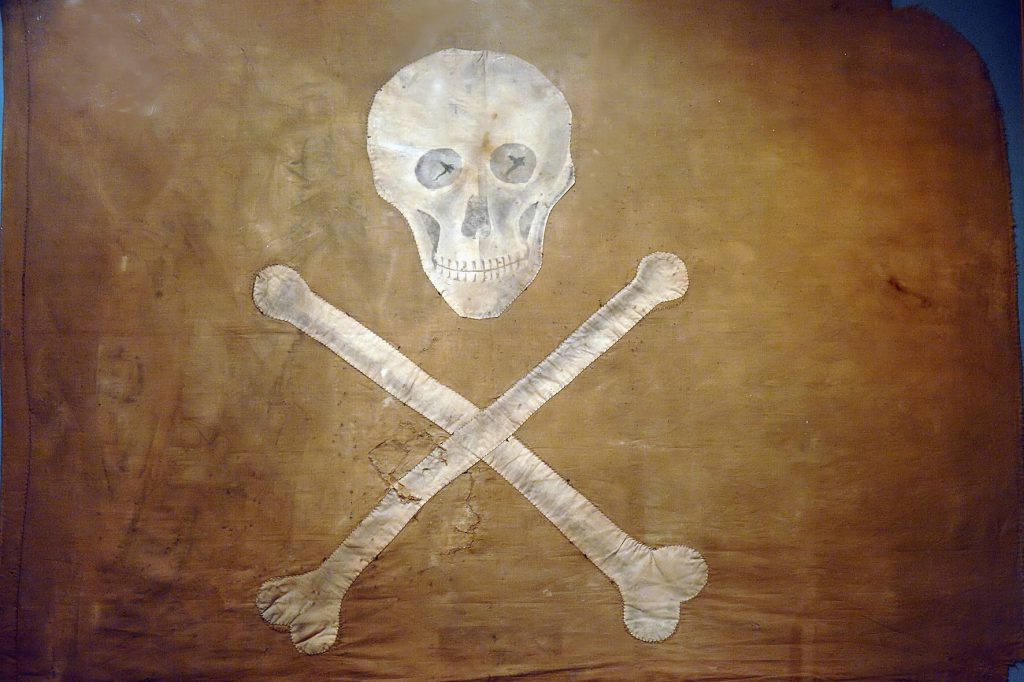
A weathered pirate flag from the Cabinet of Curiosities, with a white skull and crossbones against a brown background.

Cabinet of Curiosities

A cabinet of curiosities is made up of an eclectic collection of object that becomes a representation of all the world’s wonders and oddities in miniature.
read more »
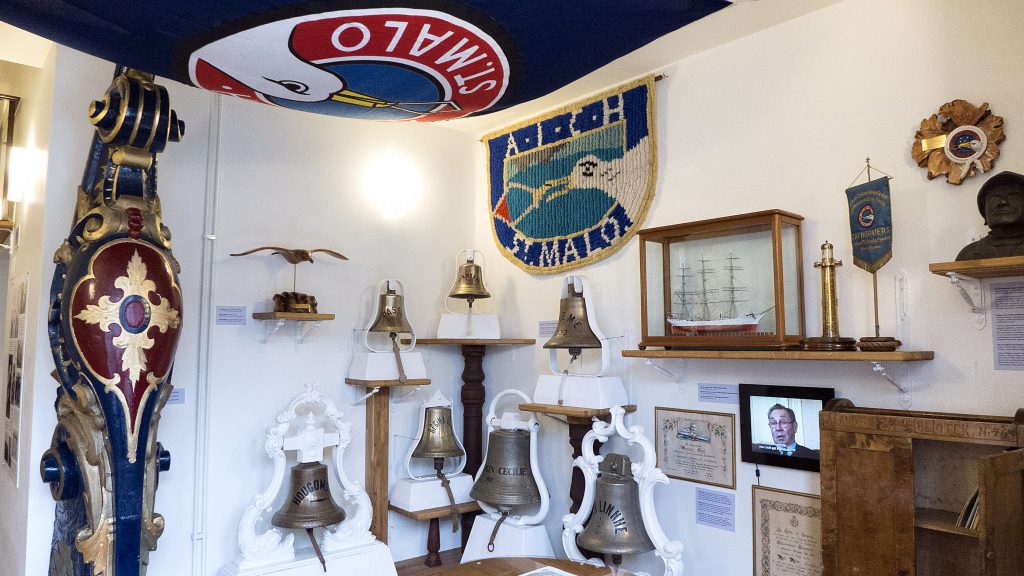
A museum room displays ship's clocks, plaques, nautical memorabilia, a model ship, a bust, a woven banner and a TV screen showing a person's face – celebrating maritime history and legends like those who braved Cape Horn.

The Cape Horn Room

Amicale Internationale des Capitaines au Long Cours de Cape Horniers was an exclusive club for seafarers who had rounded the notorious Cape Horn in a cargo-carrying sailing vessel.

read more »
FOLLOW US!
Facebook-f Instagram Tripadvisor

Åland Maritime Museum

ADDRESS HAMNGATAN 2 MARIEHAMN
TEL +358 (0)18 19 930
EMAIL info@sjofartsmuseum.ax

THE TRUST
ACCESSIBILITY
OUR PARTNERS
SUPPORT US
CONTACT US

© ÅLANDS SJÖFARTSMUSEUM 2026 – DESIGN APRIL KOMMUNIKATION

PLAN YOUR VISIT
  • Opening hours
  • Tickets
  • Before your visit
  • Groups
  • Guided tours
  • Shop & Café
  • Venue
WHAT'S ON
CHILDREN’S MUSEUM
ABOUT THE MUSEUM
COLLECTIONS
EXHIBITIONS
TALL SHIP POMMERN
CONTACT US
  • Svenska
  • Suomi
  • English
Icon of a house
PLAN YOUR VISIT
  • Opening hours
  • Tickets
  • Before your visit
  • Groups
  • Guided tours
  • Shop & Café
  • Venue
WHAT'S ON
CHILDREN’S MUSEUM
ABOUT THE MUSEUM
COLLECTIONS
EXHIBITIONS
TALL SHIP POMMERN
CONTACT US
  • Svenska
  • Suomi
  • English
Icon of a house